Nov. 13, 2026 · 8 min read
Can the ambulance get there? Notes from the mayor's regional session
The last Sioux Falls Listens topic session brought communities from across the region to the same tables as city leaders. Emergency care, housing and working together across town lines kept coming up. Here's what I heard, how it compares to the first two sessions and why the Nov. 18 town hall matters.
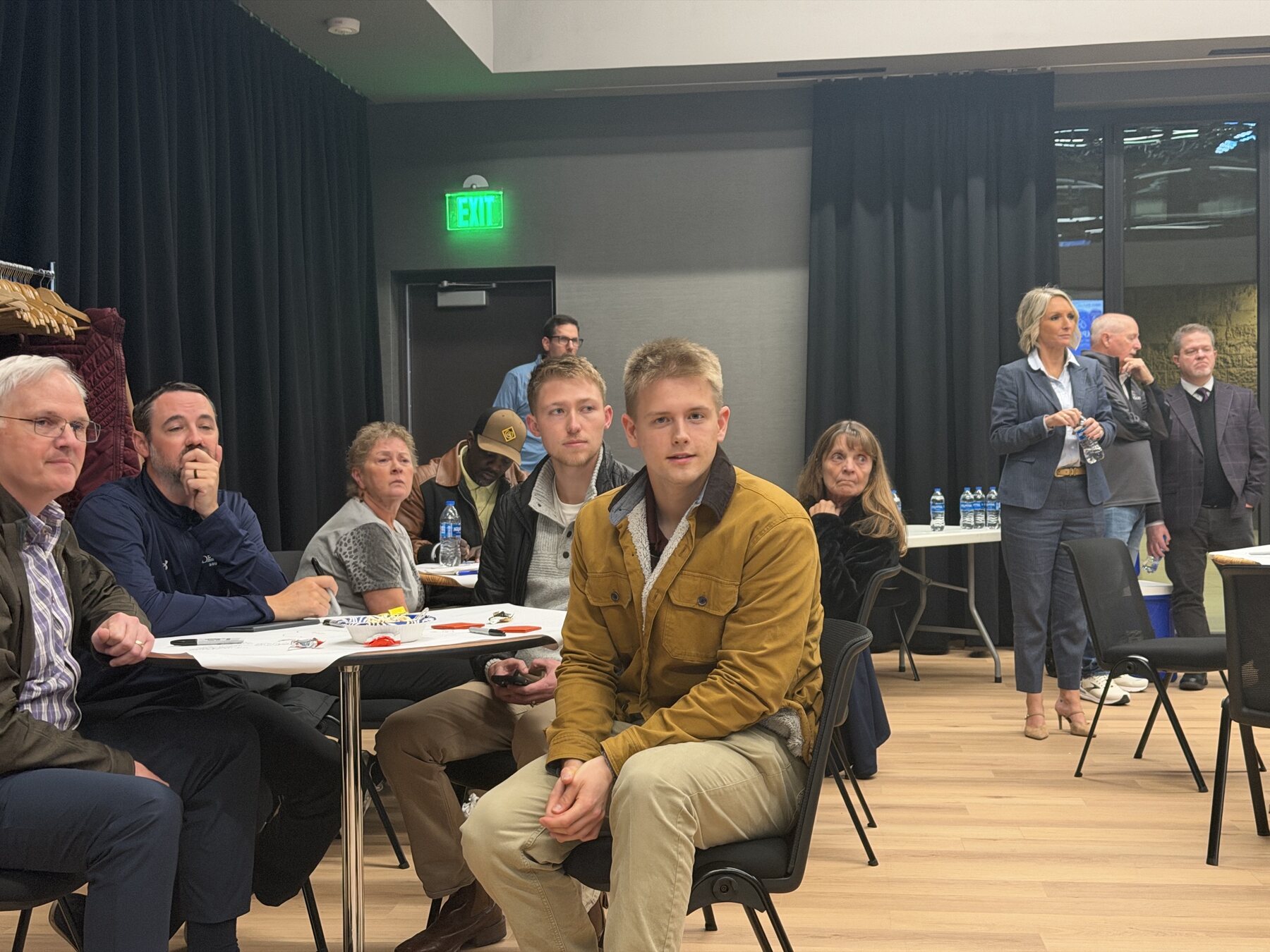
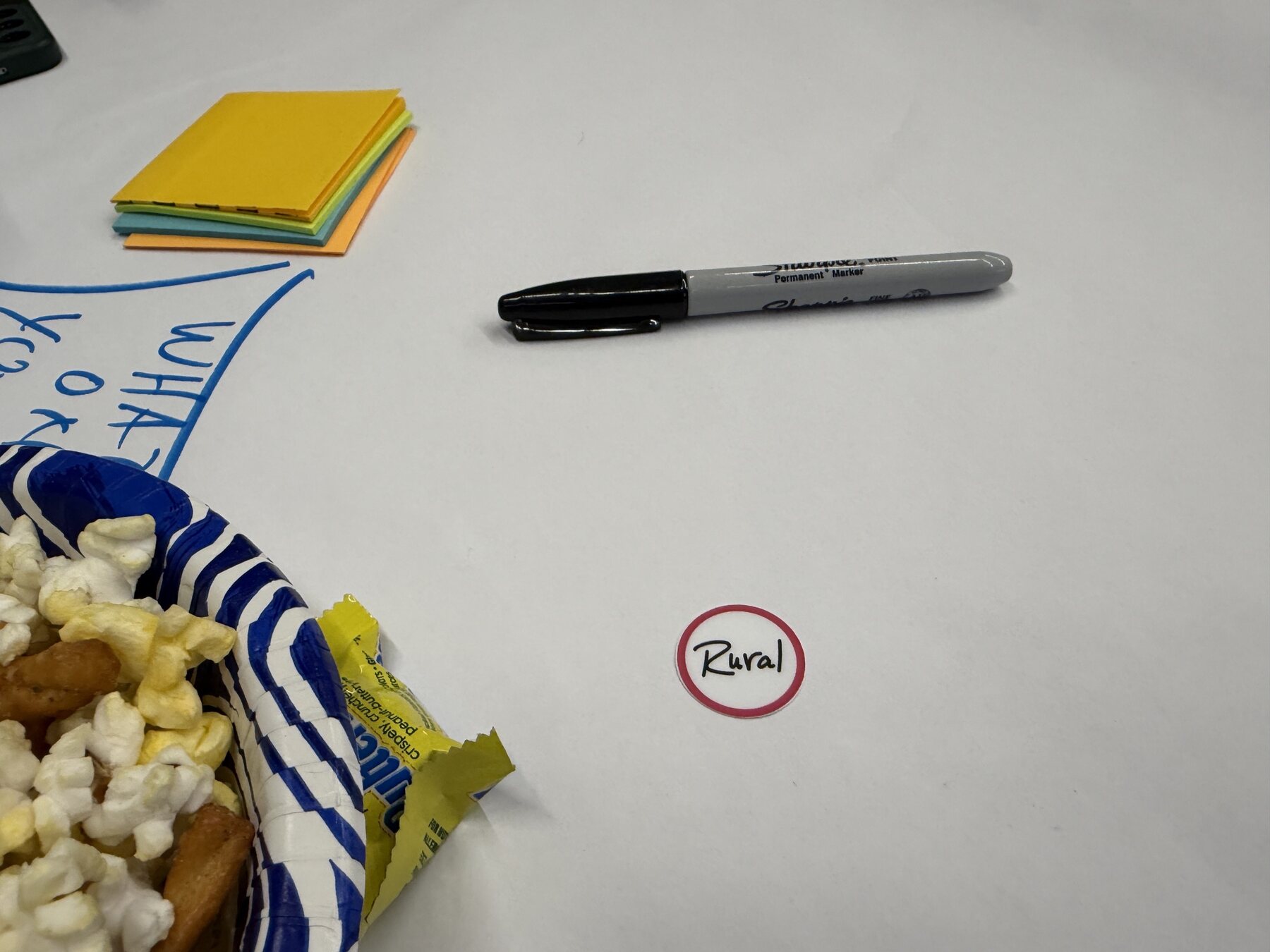
The table where I sat for my second conversation had a little round sticker on it. It said "Rural."
That sticker set the tone for the night. Thursday's Sioux Falls Listens session focused on regional economic development. It brought people from the towns around Sioux Falls to the same tables as city leaders, to talk about how we can work together. Sioux Falls doesn't stop at the city limits, and neither do our problems.

A room that reached past the city limits
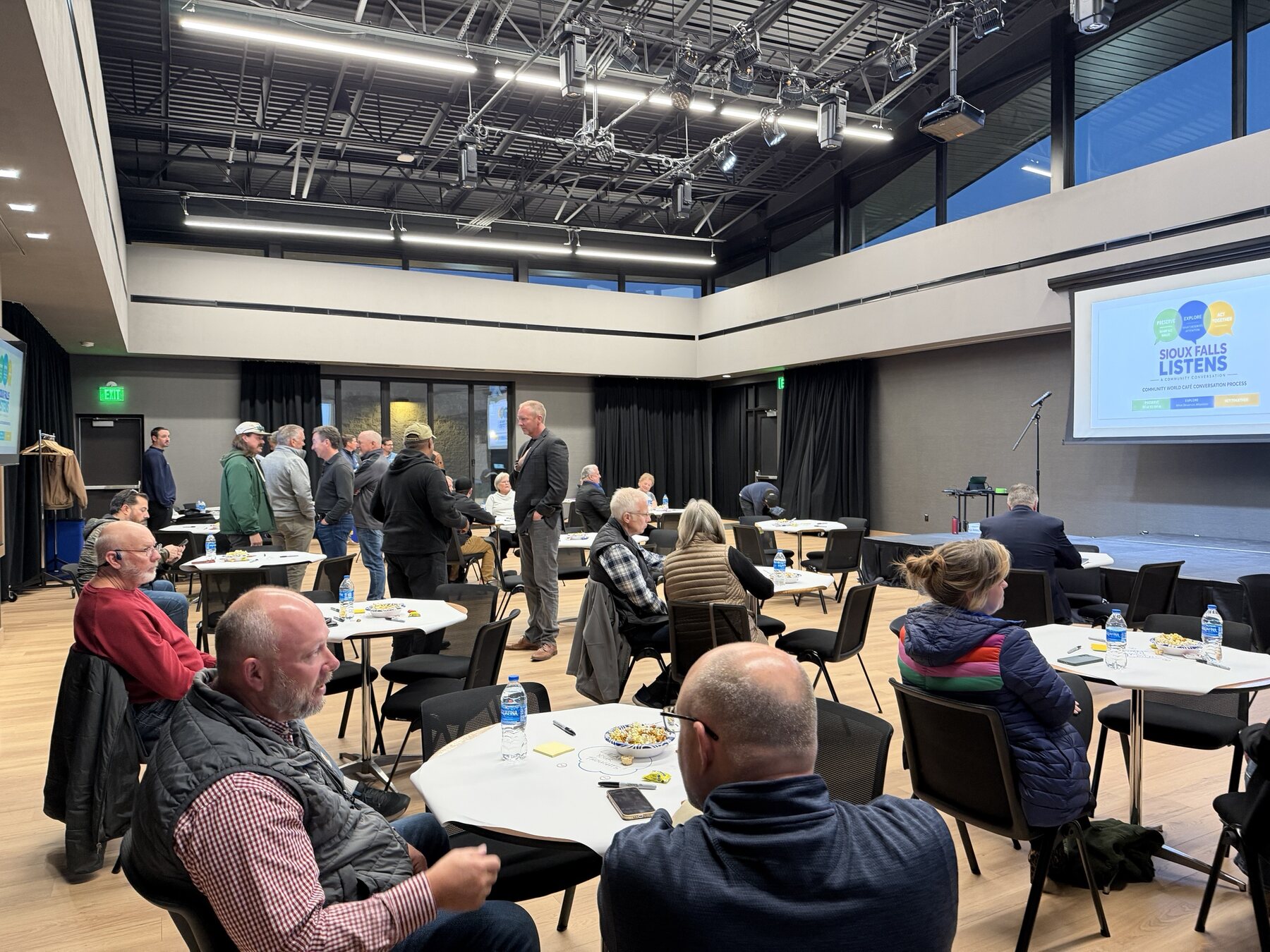
This was the last topic session in Mayor Christine Erickson's Sioux Falls Listens series. This one was built for the towns around us. The big question was how they and Sioux Falls can work together. It was held again at the Levitt at the Falls. Sioux Metro Growth Alliance and Dakota Resources sponsored it. John Beranek facilitated, the same way he has all fall. Three questions. Three rounds. New tables each round.
Several city directors sat at the tables too, alongside the mayor's chief of staff, Jim David.
Many towns were represented, more than I could get to. I made a point of sitting with people from outside Sioux Falls, and over the night I talked with neighbors from Freeman, Viborg, Lennox and Hartford. Most of what follows comes from those tables.
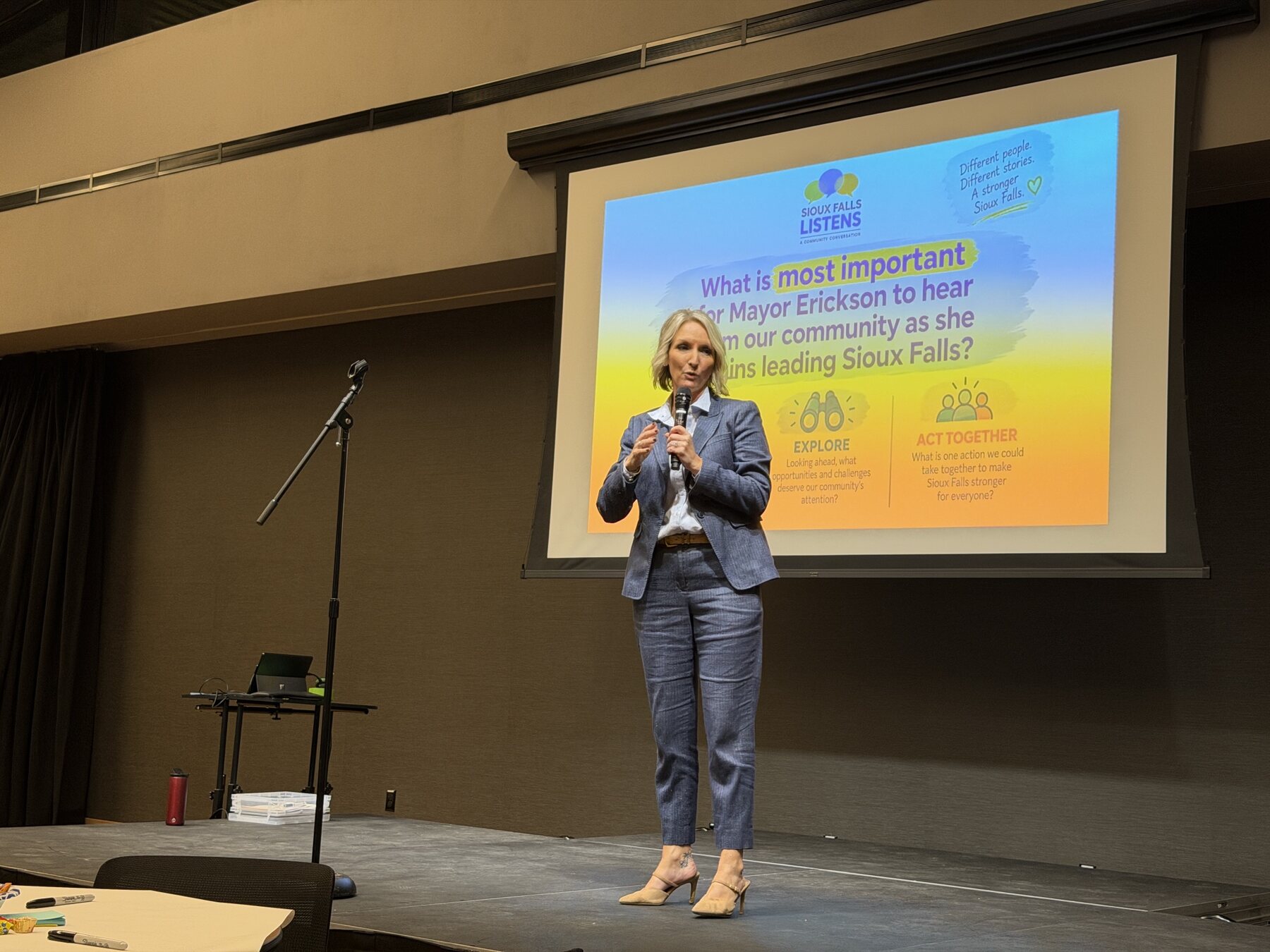
The mayor opened with why she's doing this at all. Her election was close. So she scaled back her own plans and decided to listen first. "It's not just about me," she said. "It's about us."
What we love
The first round asked what we should protect as we grow. The answers sounded a lot like the arts and business sessions. That's a good sign.
Neighbors who look out for each other. Someone from Freeman told us about a neighbor who handed over a garage code before leaving town for a few weeks. "If anything happens, here's the code." That's small-town trust. Another person at my table has lived in the same Sioux Falls neighborhood for 15 years and still doesn't know the neighbors. No block parties. No get-togethers. They want that feeling back.
Places we share. Falls Park. The downtown library. The farmers market. Our historic buildings. All of them went up on the wall.
Big-city amenities, small-town feel. People in Viborg and Freeman come here for the hospital, the hockey game, the concert. People in Sioux Falls want to keep the feel of a place where you run into someone you know at Costco.
A giving region. Philanthropy, volunteering and showing up for each other. Freeman and Sioux Falls named the same thing.
The big questions
Round two asked what deserves attention. Three things came up at every table I joined.
Can the ambulance get there? This was the conversation of the night. A Hartford leader at my table explained how coverage works there. Ambulance service comes from a nearby town. If that crew is busy, the next call goes to Sioux Falls. If Sioux Falls can't spare one, it's Dell Rapids, about 30 minutes out.
He described an emergency this summer when that chain ran out. A neighbor finally drove the injured person to the hospital in a private car. The fire chief called him the next week, furious, and said they had to fix this.
Sioux Falls has some of the best medical care in the region. But it only helps if you can get to it. As one person put it, for a lot of folks who commute in from small towns, it's easier to get to work than to get to the hospital.
And the city is stretching out too. At another table we asked when it makes sense to spread ambulances and police across Sioux Falls the way we already spread out fire stations.
Where will people live? Not just "affordable housing." People kept reaching for a better word. Accessible housing. Rentals people can actually afford. Paths to owning a home for people who can pay but don't fit a bank's checklist. Viborg says it's hard to find housing there too. One person said friends pay as much for a two-bedroom apartment as he pays on his mortgage.
Do small towns get a heads-up? Sioux Falls is growing toward its neighbors. Viborg expects its commute to shrink and its town to change in the next five years. The Smithfield move came up as an example of a big decision that reached a neighboring town late. People weren't asking Sioux Falls to slow down. They were asking to be in the conversation earlier.
A few ideas from the wall
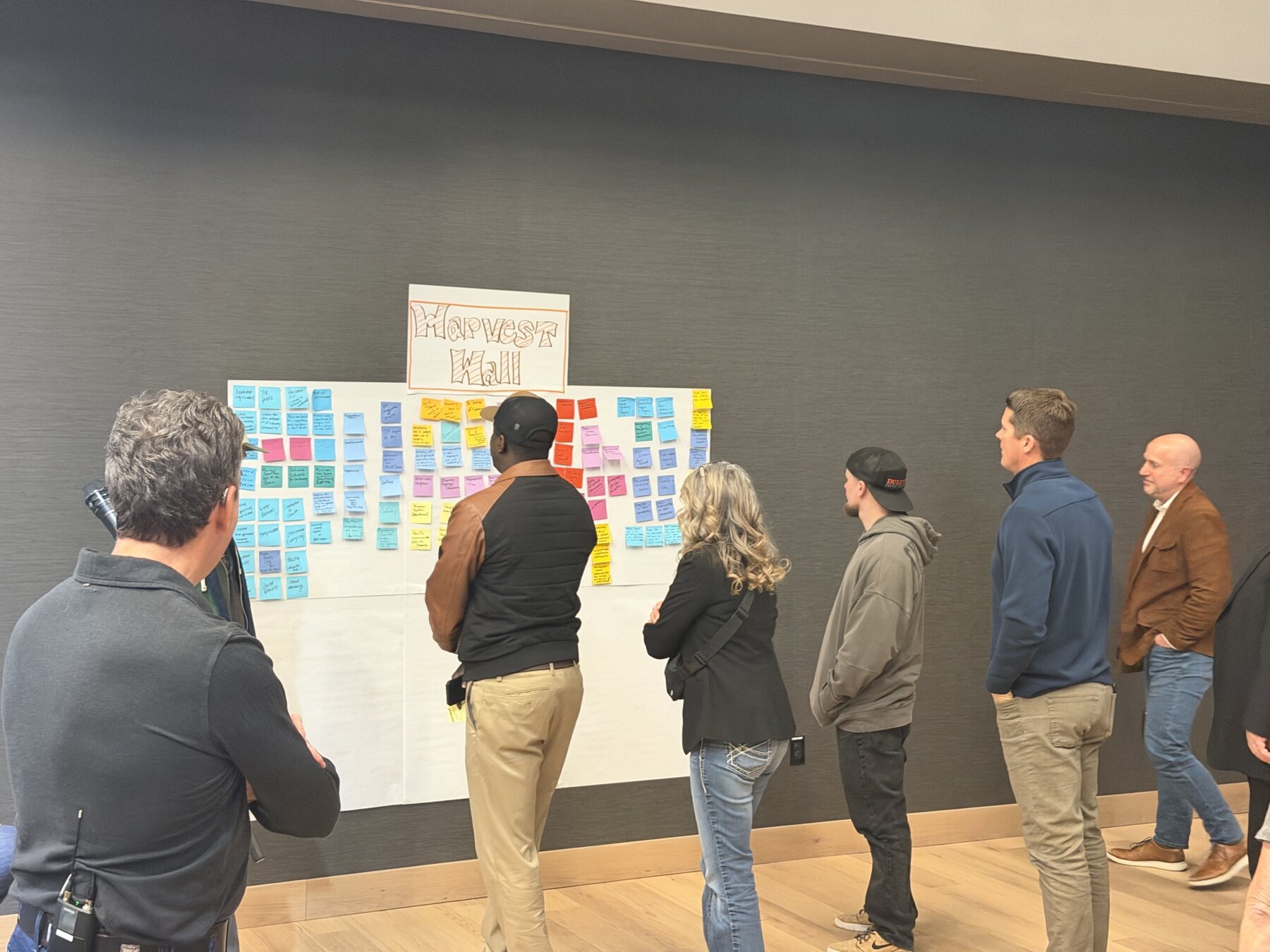
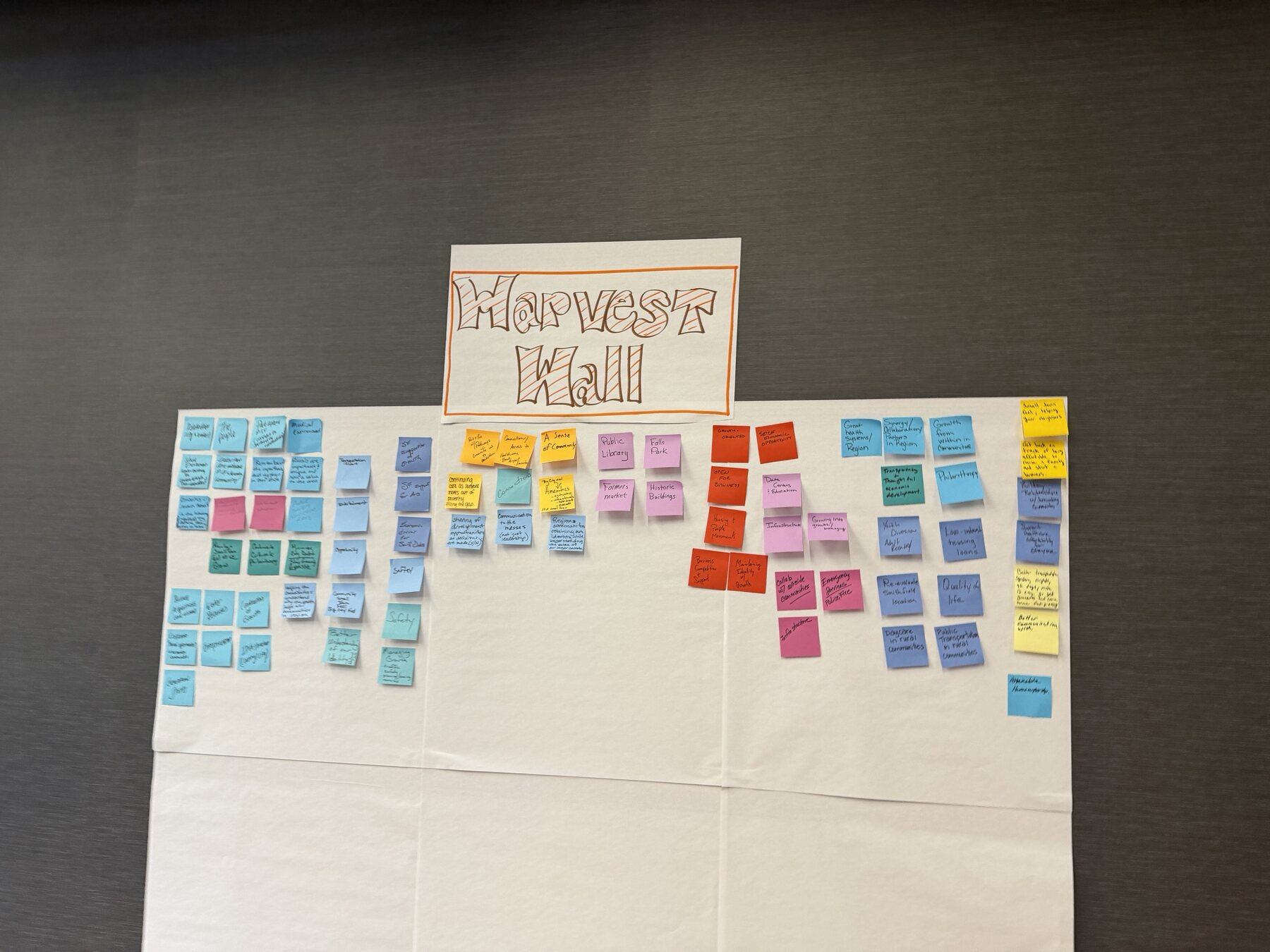
Here's a sample of what people put up on the Harvest Wall by the end of the night:
- Collaborate with the communities around us, as partners
- Emergency services, police and fire, that keep up with growth
- Daycare in rural communities
- Public transportation in rural communities
- Low-interest housing loans
- Affordable homeownership
- Transparent, thoughtful economic development
- Share development opportunities with the public as decisions are made
- Communication to everyone, not just leaders
- Keep helping people after they move out of poverty, so they don't fall through the gap
- Youth diversion and support for adults returning home
- Let small towns keep their own identity while seeing the value of the bigger region
- Re-evaluate the Smithfield location
What one table came up with
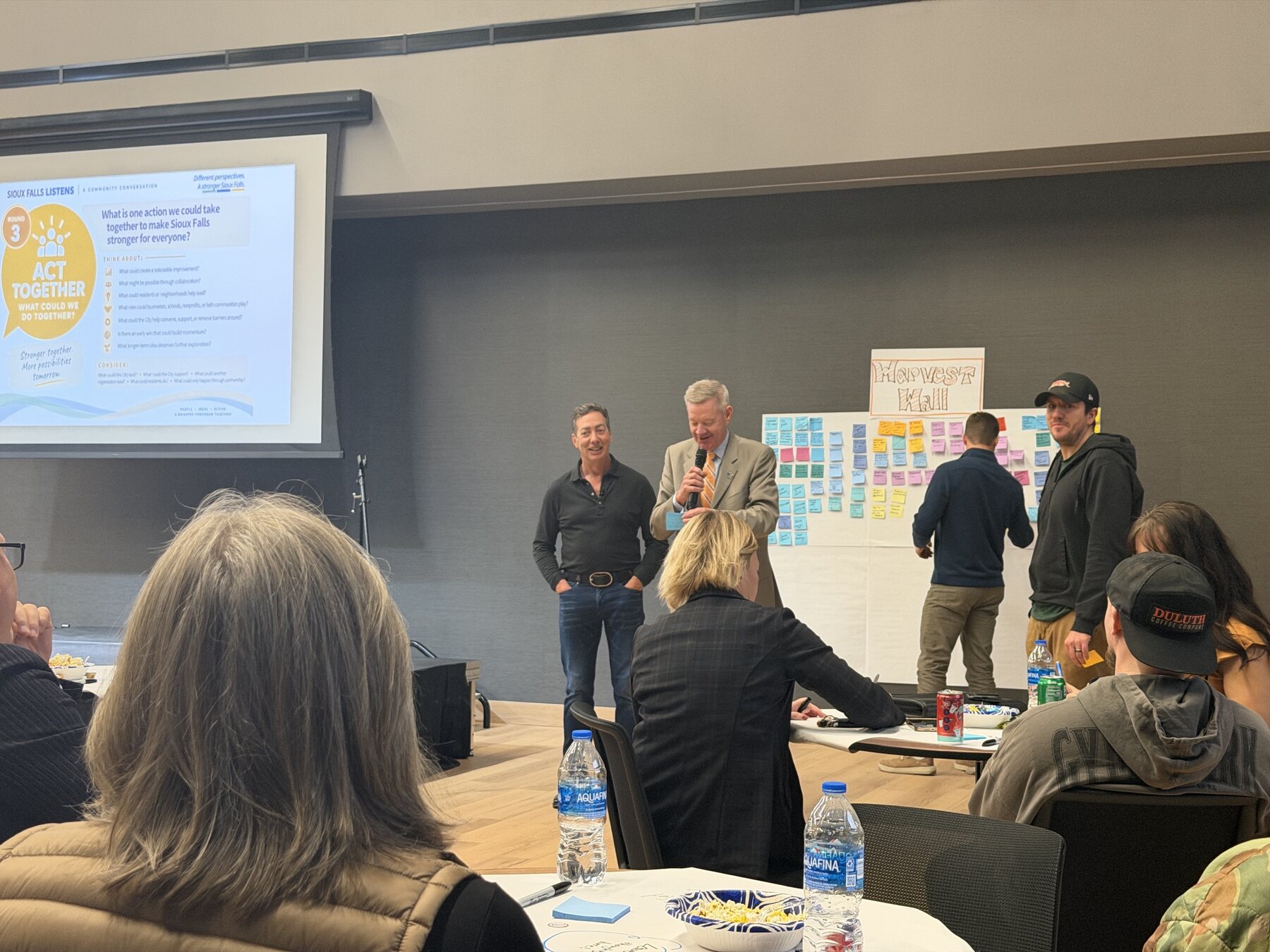
In round three, we were asked for one thing we could do together. My table stayed on ambulances.
We landed on an idea. A shared emergency services network for the whole metro area. One plan for where ambulances sit and who backs up whom, instead of every small town solving it alone.
Nobody at the table pretended it would be cheap. Every one of these talks ends at the same place. Who pays? Lennox and Hartford can't carry it alone, and neither can Sioux Falls. That's why people kept pointing to the state.
Here's what struck me. The people at that table did not share the same politics. They said so out loud. And they agreed anyway. Nobody thinks a neighbor should wait half an hour for an ambulance.
Other tables had their own answers. Bring school superintendents, college presidents and nearby mayors together on reading skills. Ask for public input before development starts, not after. Take this kind of listening session on the road to other towns. And one I loved: be more human with each other. Meet people where they are.
Three sessions, one thread
This was the last of three topic sessions. I went to all of them. Looking back, each room pushed the circle a little wider.
Arts, Oct. 21. A packed room talked about taking the arts beyond downtown. Art in the parks. Space to make things, not just see them. Neighbors who weren't in the room yet.
Business, Nov. 5. A quieter room asked who gets to grow with the city. Housing young workers can afford. Streets and trails that reach every neighborhood. A newcomer who can't find the door.
The region, Nov. 12. This room reached past the city limits. Ambulances, housing and a seat at the table for the towns around us.
Three different rooms. The same things kept coming back.
We're a giving place. All three sessions named it first.
People want what's good to reach farther. From downtown to the neighborhoods. From the neighborhoods to the towns around us.
Someone is always missing. The arts session noticed who wasn't in the room. The business session asked who may not benefit. This one heard small towns asking to be told sooner.
That's a lot for one transition team to sort out. Which is why next week matters.
Your move: be there Nov. 18
Every idea from all three sessions goes to one last community town hall.
Wednesday, Nov. 18, from 5:30 to 8 p.m. at Cherapa Place, 300 N. Cherapa Place, third floor.
That's where the ideas get sorted and prioritized for the mayor's transition team. If something in these recaps matters to you, that's the room to say so. Bring someone who hasn't been to one yet.
Can't make it? You can still share ideas online.
Closer to home
That 15-year neighbor story stuck with me. A lot of what came up Thursday starts on your own block.
Look up your address in our Neighborhood Guide. It shows your neighborhood association, or how to start one if you don't have one yet.
And if your block wants a reason to finally meet, 2027 Neighborhood Project Grants are open now. Groups can get up to $15,000. Here's how it works. Applications are due Feb. 5.
Get the full picture on our Sioux Falls Listens issue page, or see what's coming up on the civic calendar.
These are my own notes from the tables I sat at. They aren't a full record of the night, and quotes are as close as I could capture them.
Sources
- Sioux Falls Listens, Office of the Mayor
- Mayor Erickson Announces Sioux Falls Listens Sessions, City of Sioux Falls, Sept. 28, 2026

Have a tip or a story idea? Email issues@risingtogethersf.com.
