Nov. 10, 2026 · 12 min read
Inside the first data center committee meeting: the rules today, Gemini's case and 27 speakers
The City Council's data center committee met for the first time Monday. Staff laid out the rules on the books today, the developer behind the Gemini project answered questions, and 27 people spoke. Here's the recap, with links to every moment in the video.
Two weeks ago, about 180 neighbors sat in circles with city and county leaders to talk about data centers. Monday night, the work moved to the committee that will actually write the rules.
I went through the full two and a half hours of the City's video. Here's what happened, as clearly as we could recap it.
Every quote below links to that moment in the City's video. Want all of it? Download our cleaned-up transcript (PDF), with speaker labels and timestamps.
The short version
- No votes. Chair Rich Merkouris called it a night for "level setting," learning the rules on the books today (0:02:29).
- The rules today: data centers can go in light and heavy industrial zones. State law already makes data centers pay for their own power costs and report their water use.
- The limits: the City Attorney said the city can set reasonable rules but "can't regulate them out of business."
- Gemini spoke. It has no signed end user yet, and says the earliest a building could be powered is late 2028.
- 27 people spoke. Most asked for a pause or tougher rules. Business and trades groups asked for clear, fair rules that keep the door open.
- Next: proposed rules are due Nov. 27. The committee meets again Nov. 30.

Who's on the committee
The Regulatory Oversight Committee is four City Council members: Chair Rich Merkouris, Sara Pankonin, James Oppenheimer and Ryan Spellerberg. Its job is to bring the full council a report or proposed rules on data centers by Jan. 12. More than 100 people came Monday, The Dakota Scout reported.
What the rules say today
Public Works Director Mark Cotter walked through a two-page fact sheet (0:03:51).
State law:
- A data center is anything using 10 megawatts or more at peak (0:03:59).
- Power companies must charge data centers the full cost of serving them, so it isn't spread to everyone else (0:04:04).
- Before opening, a data center must tell the local water provider how much water it plans to use. The provider has to say in writing whether that fits the local supply (0:04:40).
- The state Public Utilities Commission doesn't approve data centers. It does approve big new power lines (0:06:12).
City rules:
- Data centers are allowed in light and heavy industrial zones (0:07:47).
- Industrial noise can't top 75 decibels at the property line, with short bursts up to 95 (0:08:11).
- Lights are capped at the property line too. The city checks with a meter when neighbors complain (0:15:15).
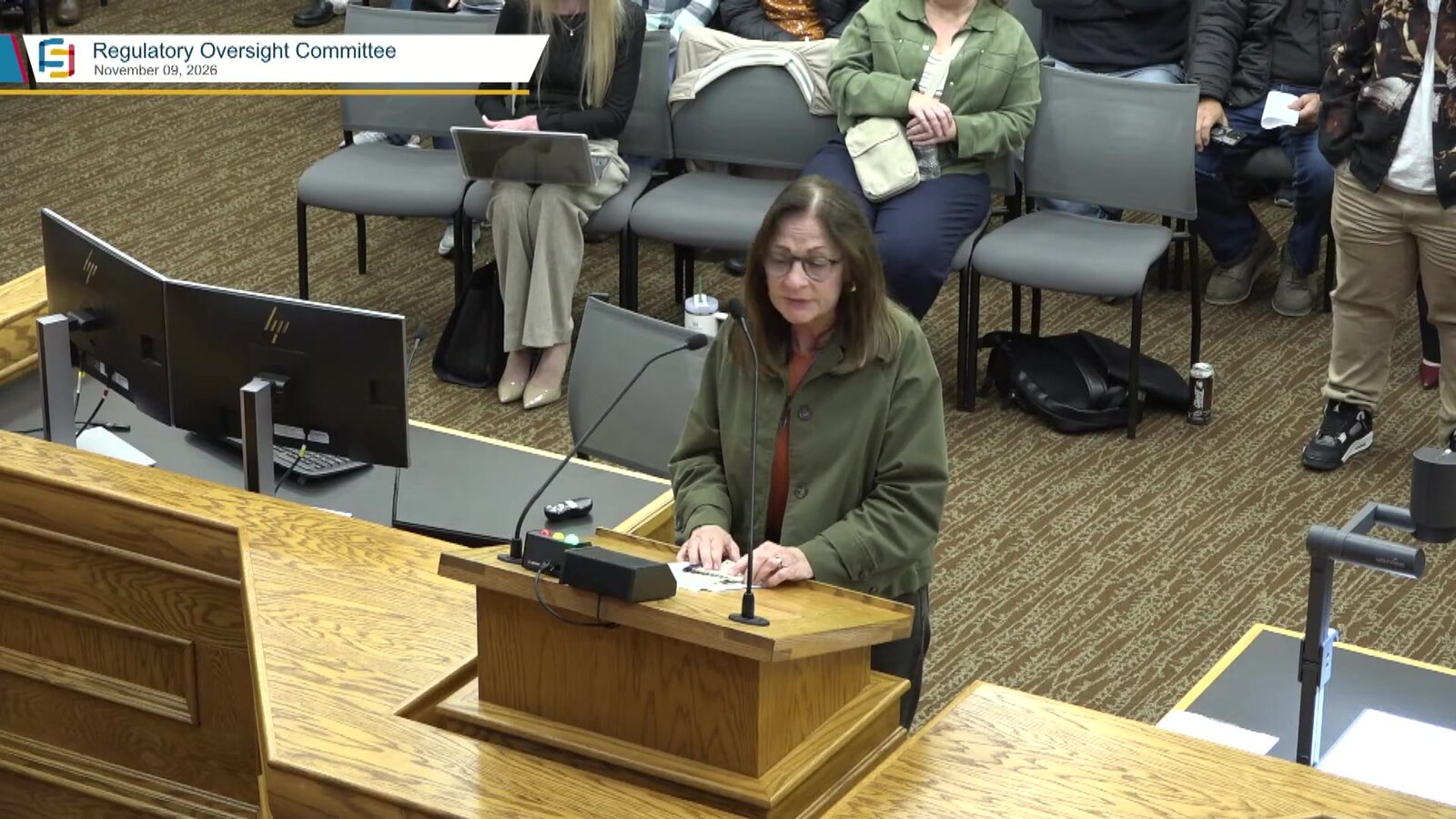
On water for Gemini, Cotter said the city made it clear "from the very beginning we didn't want water to be used, drinking water to be used for cooling" (0:25:32). Councilor Spellerberg summed it up: the site gets about the same water as "a single family house or a small industrial use facility" (0:26:57).
Councilors also asked staff to come back with more: what's on the city's industrial wastewater questionnaire, how loud 95 decibels really is, and what happened in another city where a data center's construction wastewater became a problem (0:22:56). A speaker later pointed out that was Cheyenne, Wyoming, not Gillette (1:47:44).
How far can the city go?
City Attorney David Pfeifle called data centers "the most fluid topic I've seen" in his 32-year career (0:27:46).
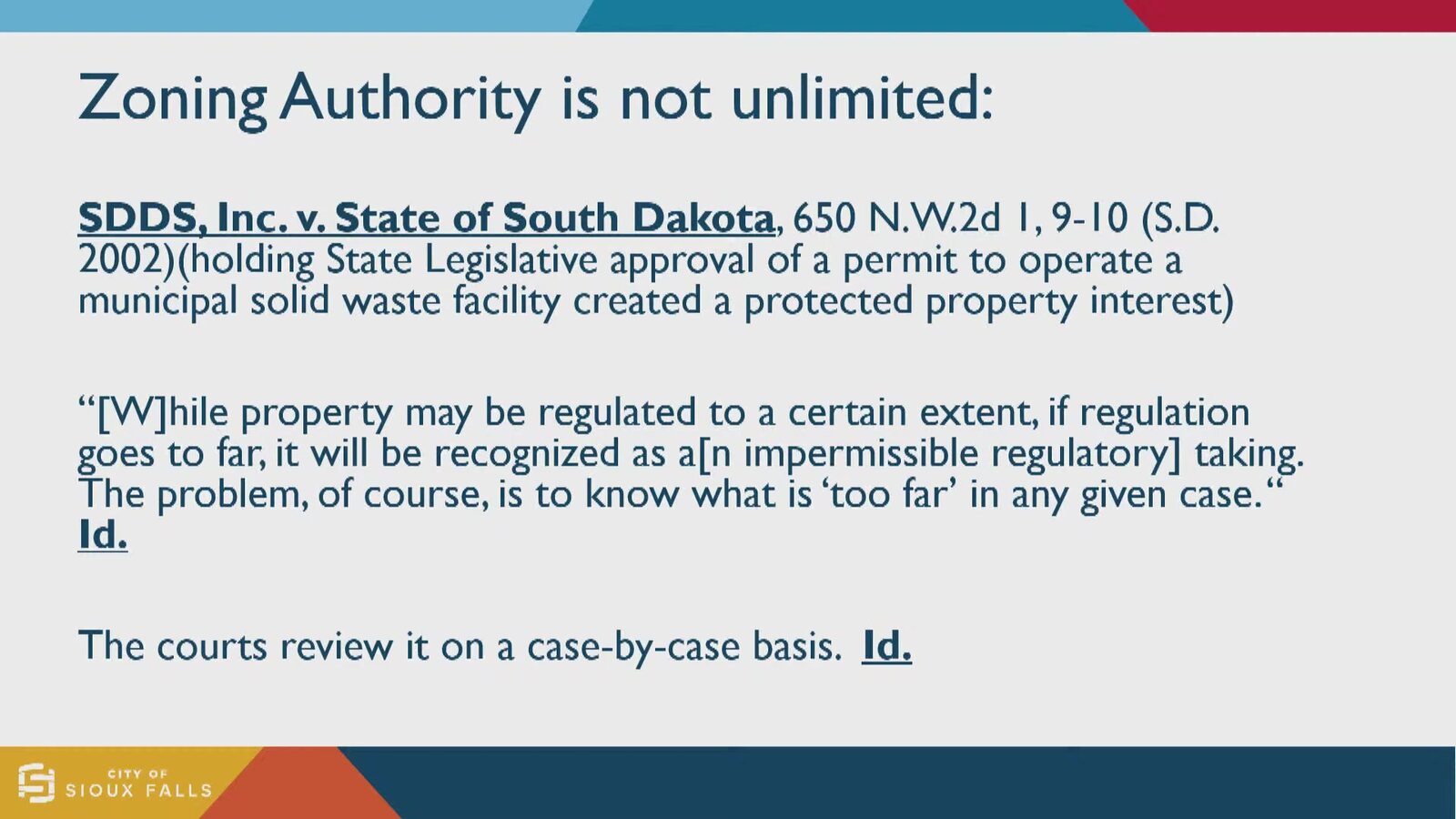
State law says it doesn't limit what cities and counties can do. Some people read that as free rein. "I can tell you that that is not necessarily the case," Pfeifle said (0:31:17). Courts allow reasonable limits on a business, but "you can't regulate them out of business" (0:34:51). He asked councilors to run any proposal past his office first (0:35:38).
He also pointed out that data centers are a unique use, with unique power, water and noise needs. That gives the city a reason to write rules just for them.
What other places are doing:
- Aberdeen passed a six-month pause, extended it six more months, and is writing rules (0:47:48).
- Vermillion is adding a data center overlay with its own noise, water and cooling rules.
- Sully County required reviews of energy, water and emissions.
- Morton County, North Dakota, requires noise studies and proof of power before a project moves ahead.
- Some places now ask for a bond or letter of credit to cover cleanup if a data center ever closes (0:44:29).
Gemini's turn
Councilor Spellerberg invited the developer forward. Michael Anvar of Gemini spoke and answered questions (0:57:40). Gemini owns the land at the southeast corner of East Rice Street and Veterans Parkway, rezoned by the City Council in January.
- Not Google. "Gemini has nothing to do with Google," Anvar said. The name means twins, after his sons (0:58:42).
- No end user yet. Asked if Gemini has a final deal with a company to run the data center: "No" (1:01:42).
- Taxes. At a full 500 megawatts, Gemini's models show about $5 million a year in city electricity taxes and $10.6 million to the state. "These are scenarios, not guaranteed revenues" (1:02:42).
- Water and power. Gemini says it will use a closed-loop cooling system, with city water limited to bathrooms, kitchens and drinking (1:04:53). It says it's paying for the grid upgrades with Xcel Energy, not residents (1:05:30).
- The rules. Anvar asked the city to recognize the approvals Gemini already has. "We're prepared to adopt reasonable standards and work with the city" (1:06:52).
- Timing. Even with an end user today, the earliest a building could be powered is late 2028, with most power in late 2029. "Nothing is imminent at this time" (1:12:09).
- Track record. Asked by Councilor Oppenheimer, Gemini said it hasn't yet finished a data center under its own name (1:18:47).
The next big step is an application to the state Public Utilities Commission for the power line to the site. Xcel files it, not Gemini (1:19:52).
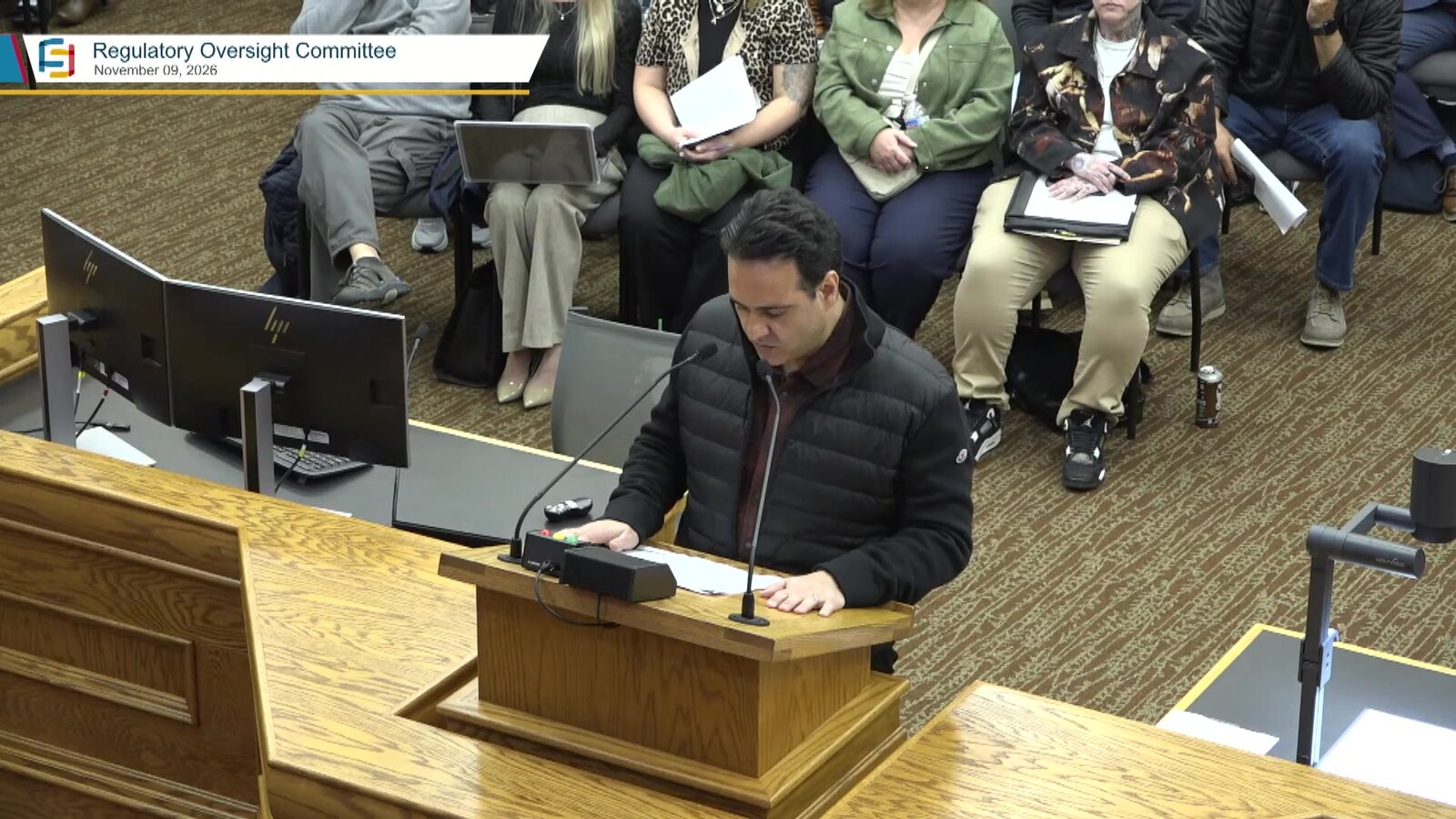
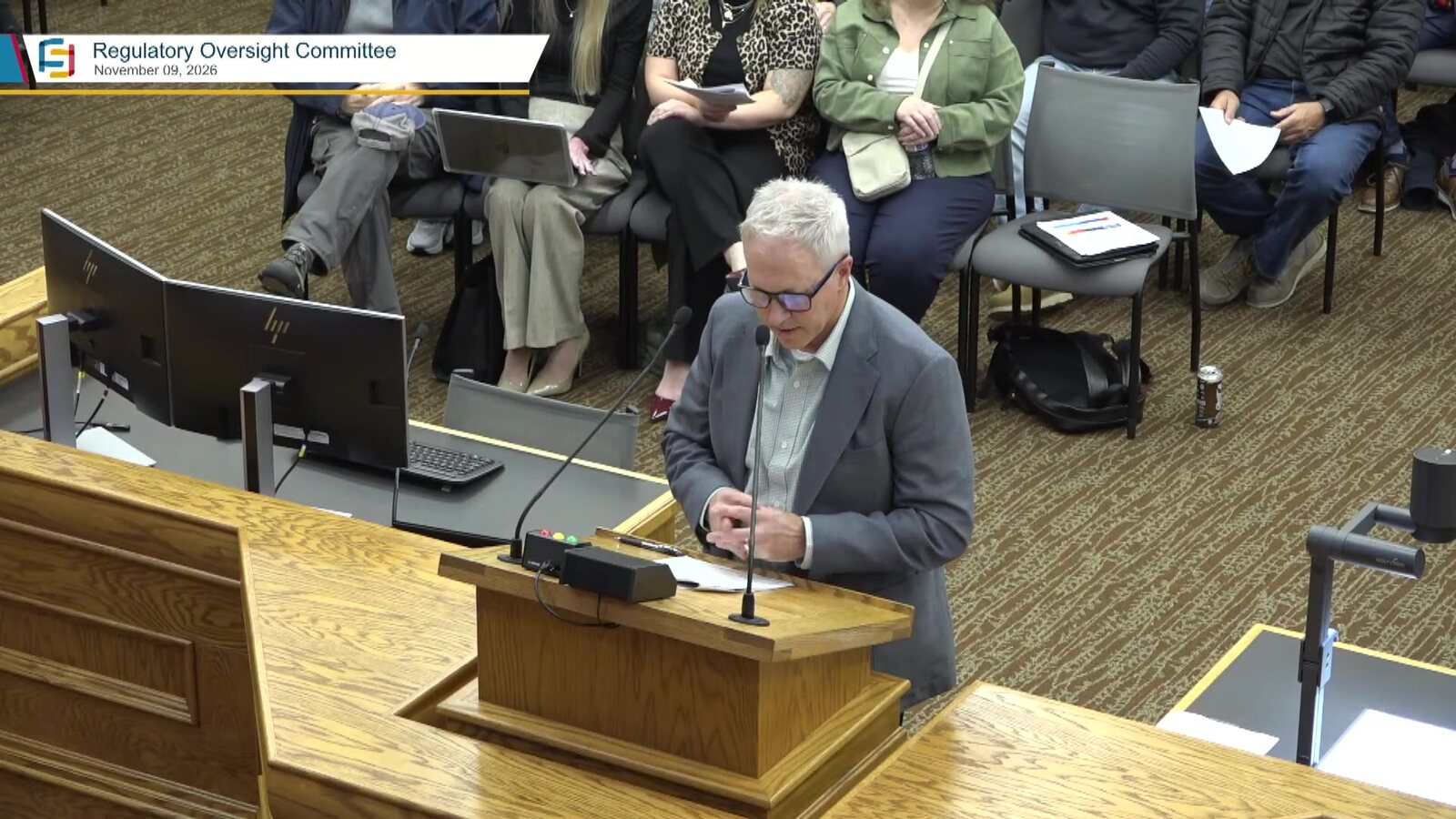
About that hum. Councilor Pankonin, a water engineer, asked what makes the low-frequency noise people worry about. Trish See, a civil engineer with Kimley-Horn working with Gemini, said it's mostly the fans on the cooling equipment (1:15:26). She also said no state or national rule yet regulates anything beyond standard decibels, though some local governments now ask for low-frequency limits (1:15:04).
What the committee asked for
Before public comment, each member said what they want staff to dig into:
- Councilor Spellerberg: whether the city can require a surety bond for a project this size (1:20:43).
- Councilor Pankonin: rules that "run with the land," so they still apply if the property changes hands (1:21:06).
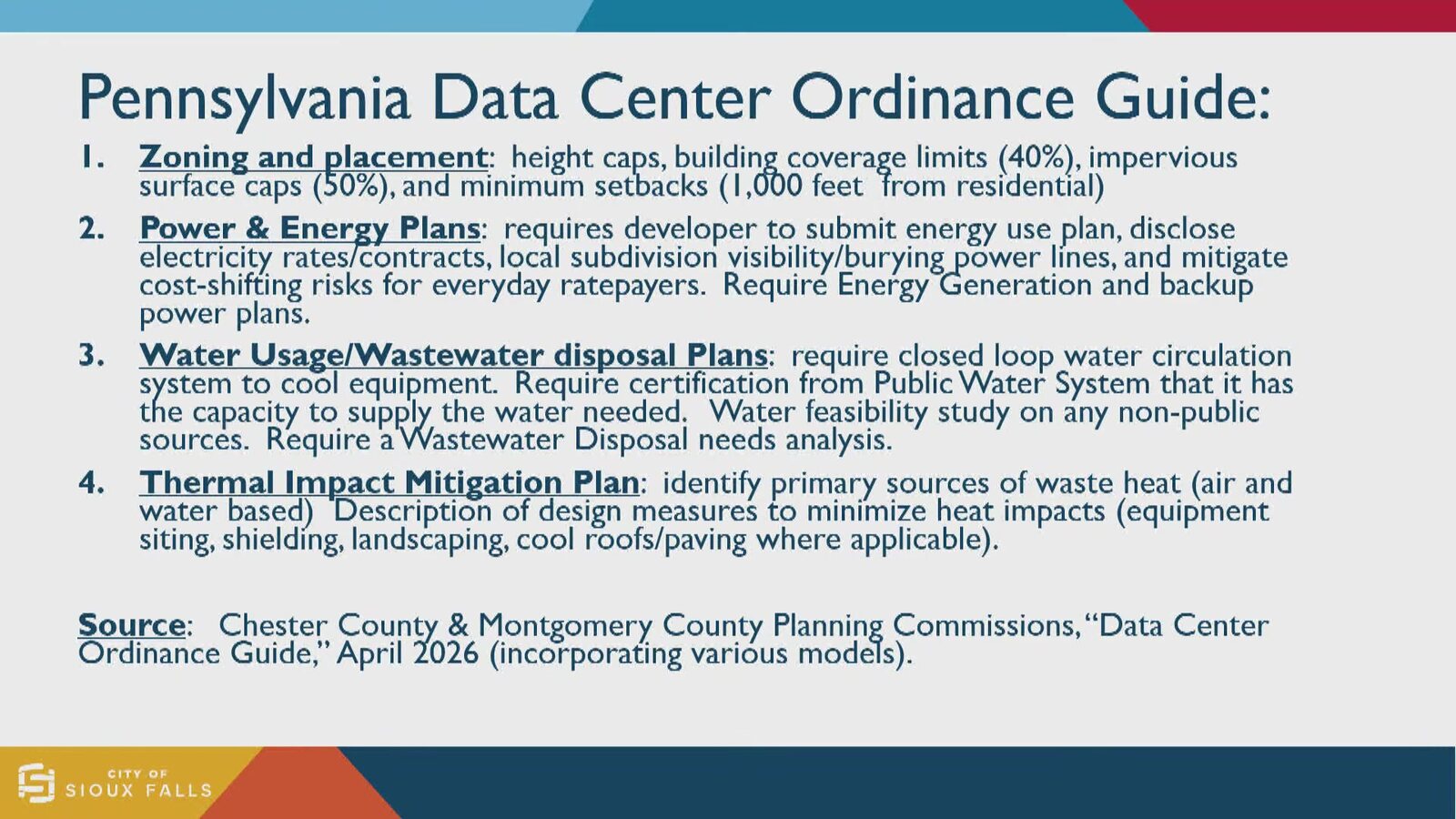
- Councilor Oppenheimer: a closer look at the rules in Morton County, Maricopa County and Pennsylvania, and how they worked. "Rather than reinventing the wheel" (1:22:08).
- Chair Merkouris: "some sort of teeth." He wants the power agreement in place before a building permit is issued, because "we can't be changing rules after building permits are issued" (1:23:12). He said noise is what he's hearing about more and more (1:23:39).
What people said at the microphone
27 people spoke during public comment. Most asked for a pause or stronger protections. About a third, many from business and the building trades, asked for clear rules that keep the project possible.
Asking for clear, fair rules:
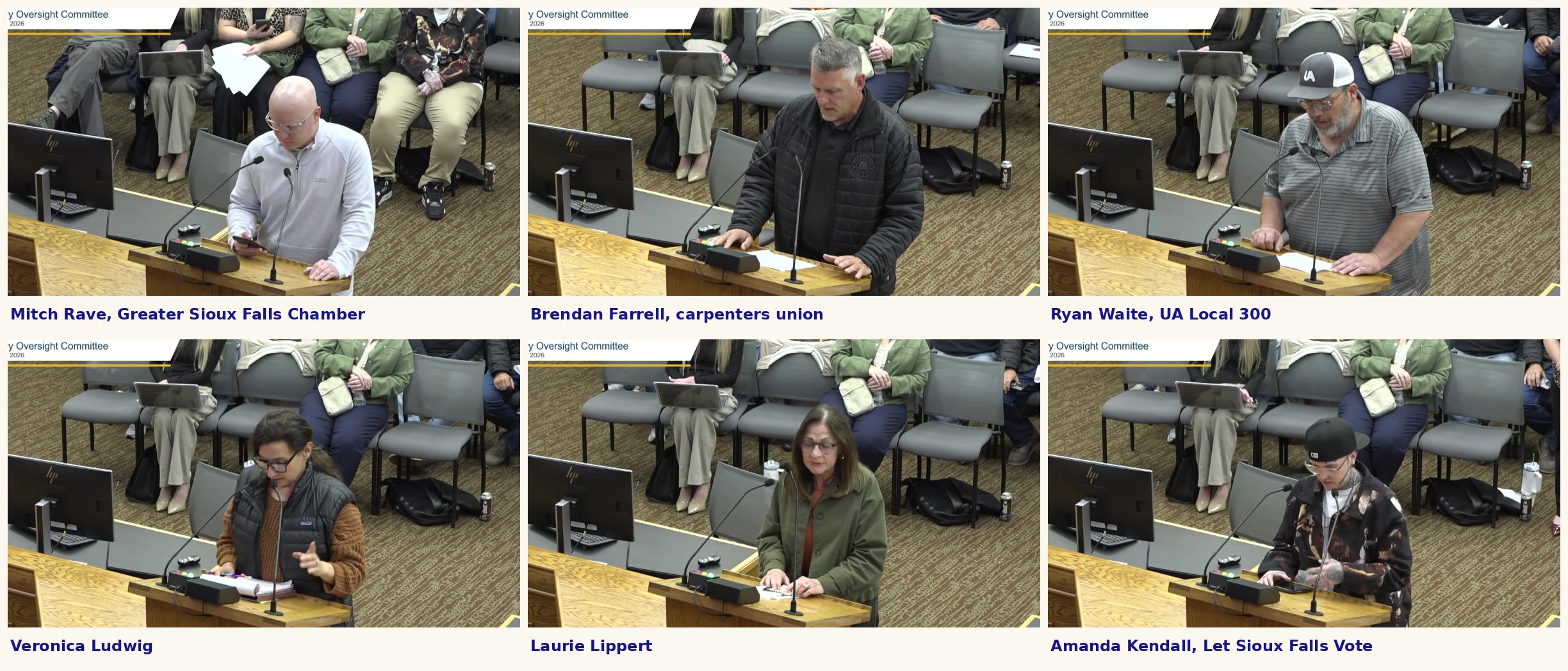
- Mitch Rave, Greater Sioux Falls Chamber of Commerce: "We'd just like to see certainty in regulatory policy" (1:28:03).
- Brendan Farrell, Northern Midwest Regional Council of Carpenters: "This should not be a choice between economic opportunity and community protection. Sioux Falls should insist on both" (1:37:34).
- Ryan Waite, UA Local 300: "Opposing this project only sends a message that we're closed for business" (1:40:52).
- Engineers from HR Green and Infrastructure Design Group, both working with Gemini, said so up front and described Gemini as following the city's process (1:31:21).
Asking for a pause or tougher rules:
- Veronica Ludwig: Gemini's closed-loop cooling "needs to be mandated" for any future user, not just intended (1:42:47).
- Laurie Lippert: "Nobody has spoken today about health." She added, "We are not ready for this project" (1:52:00).
- Amanda Kendall, Let Sioux Falls Vote: residents "shouldn't be expected to write the ordinances that are supposed to protect them. That's the responsibility of local government" (1:55:46).
- A homeowner in the Bluffs near Brandon, less than a mile from the site, asked whether anyone has studied traffic on Rice Street or low-frequency noise for nearby homes (2:02:43).
A few speakers offered a middle path. One suggested a "good neighbor" agreement: a binding contract with caps on water and noise, money held in escrow, and a check-in every five years as the technology improves (2:10:46). Another, from the South Dakota Chamber but speaking for herself, said "there's a difference between asking questions to understand an opportunity and closing the door before the questions can be answered" (2:00:13).
What happens next
- This Thursday: committee members visit sites in Nebraska to hear from people there (0:55:17).
- Friday, Nov. 27: last day to send proposed rules and supporting materials. Everything sent by then goes into the public record (0:56:07).
- Monday, Nov. 30, 6 p.m.: the next committee meeting, with presentations on power use, water use, the state permit process and environmental standards (0:55:35). Public comment is open.
- Monday, Jan. 4: one more committee meeting.
- Tuesday, Jan. 12: the committee reports to the full council.
Send your ideas or comments at siouxfalls.gov/ROC. Every date is on our data centers issue page and the civic calendar. New to all this? Start with what neighbors told city and county leaders on Oct. 27.
The committee asked good questions Monday. The people in the room did too. The best way to make sure the rules answer them is to keep showing up, and to send your ideas before Nov. 27.
It's always been our city, and now is our moment. Let's rise together.
Sources
- Regulatory Oversight Committee meeting video, City of Sioux Falls, Nov. 9, 2026
- Regulatory Oversight Committee, City of Sioux Falls
- Business, construction leaders speak in favor of fair data center regulations, The Dakota Scout via Sioux Falls Live, Nov. 9, 2026
- Gemini project could be shielded from new Sioux Falls data center rules, The Dakota Scout via Sioux Falls Live, Oct. 13, 2026
Transcript made from an automatic transcription of the City's video. It is not an official record, and some names may be misspelled. The City's official minutes will be posted at amv.siouxfalls.gov. Photos are still frames from the City's video.

Have a tip or a story idea? Email issues@risingtogethersf.com.