Oct. 29, 2026 · 6 min read
The railroad crossing open house, and how to get more people in the room
Wednesday's open house on 130 railroad crossings was quiet. Here's what I learned from the study team, why turnout matters, and how you can still weigh in before Nov. 30.
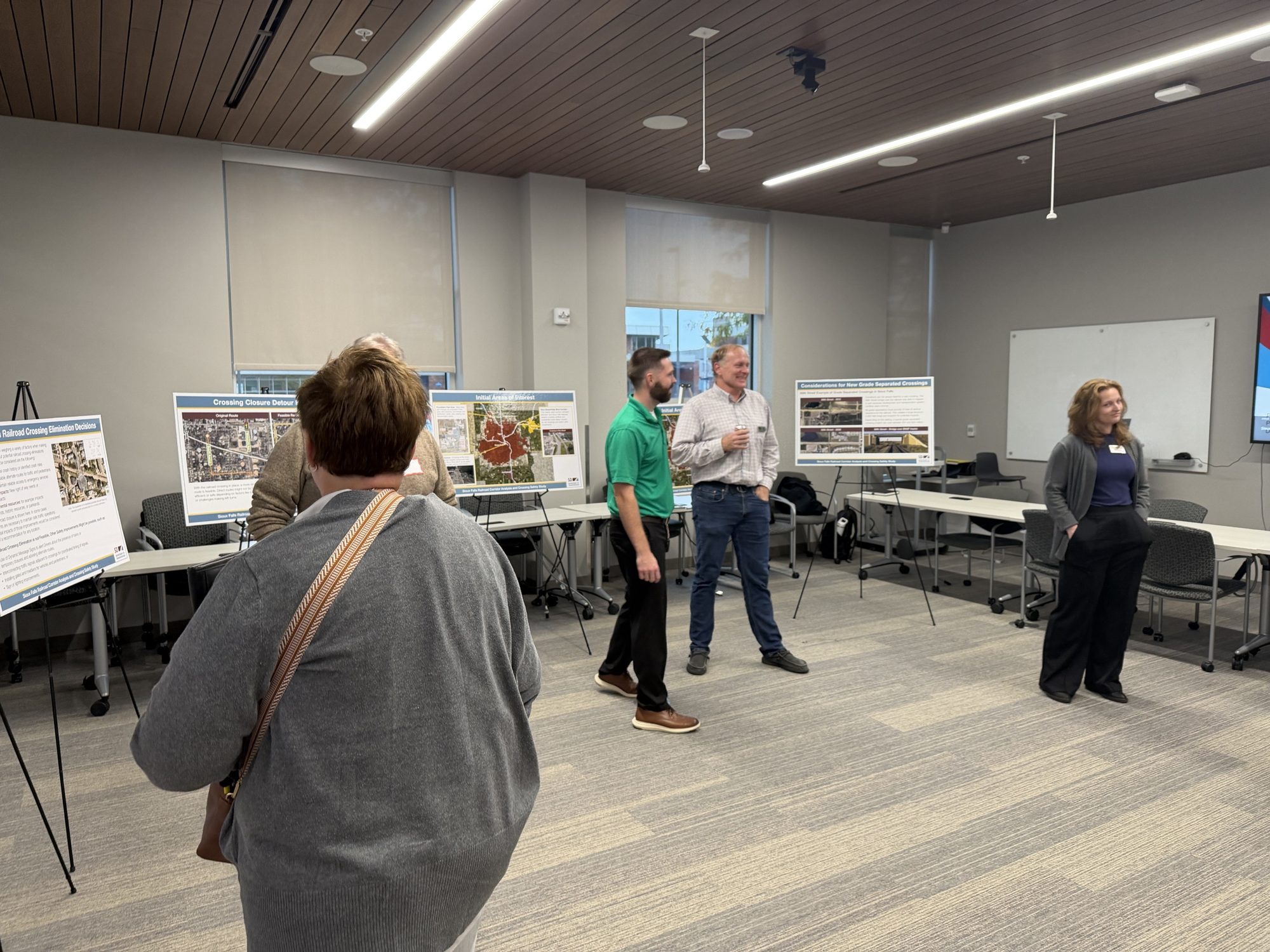
On Wednesday evening, I went to the first open house for the state's study of 130 railroad crossings around Sioux Falls. It was my third public input session in a week, after the data center meeting and the viaduct open house.
This one was quiet. That turned out to be the most interesting part.

What it was like
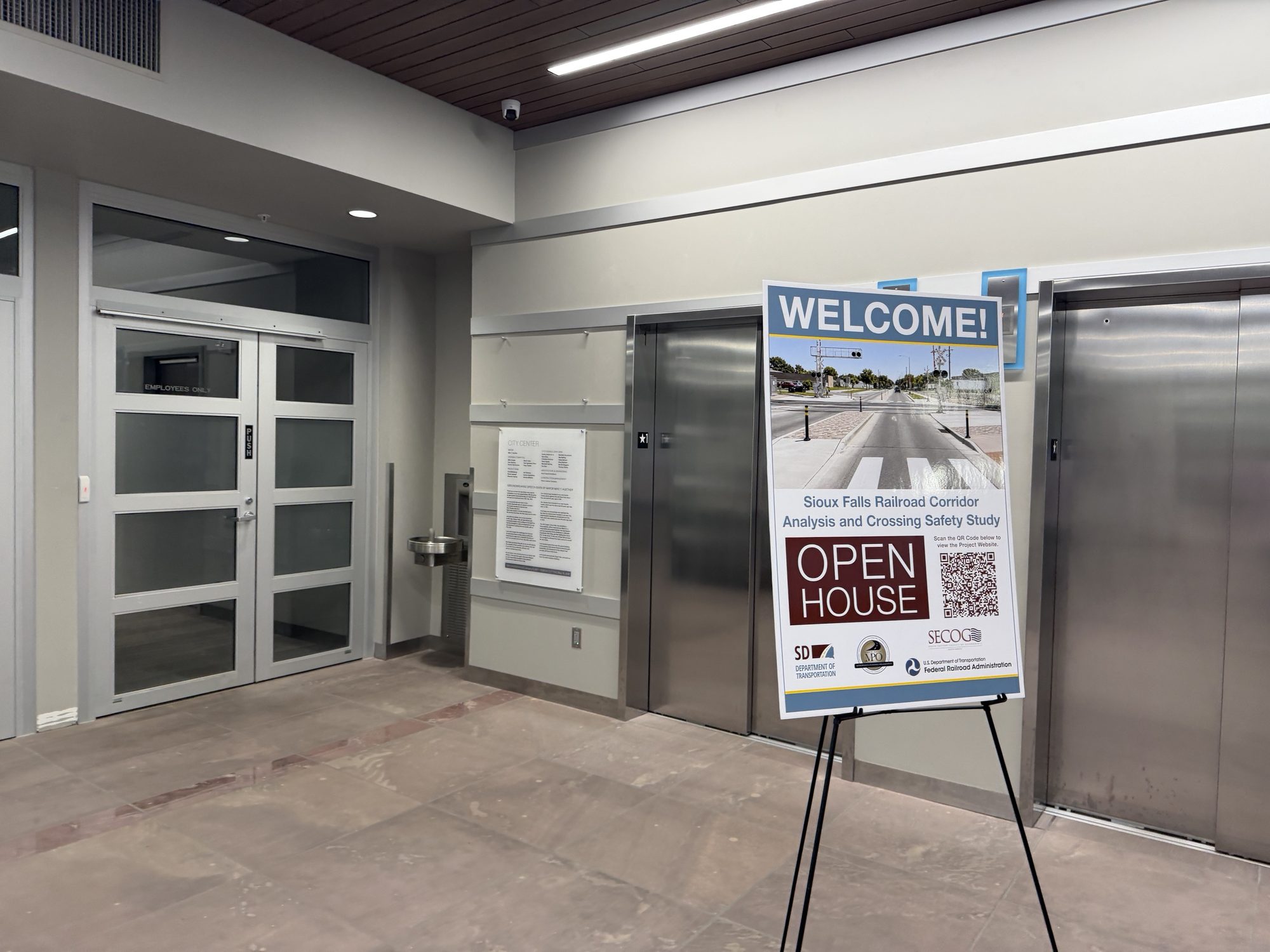
The open house was in a meeting room at City Center. It was a drop-in format, with display boards on easels and staff from SDDOT, HR Green (the engineering firm doing the study) and the City there to answer questions.
Unlike the viaduct open house, there were no sticky notes or maps to mark up. Input happens online, through a survey and an interactive map.
The crowd was small, and I think promotion was a big part of why. The day before, the viaduct open house had posters around town and coverage from several news outlets. This one had much less. When I mentioned it to people, hardly anyone had heard of it.
What I learned
The upside of a small crowd is time. I got to talk at length with the people doing the work.
The six areas aren't a shortlist. Gabin Kundwa, a project planner with HR Green, explained the six areas the study named first, the ones we mapped in our explainer. They aren't the only crossings that could change. Each one is an example of a kind of problem the team has heard about. Take Cliff Avenue by Avera McKennan: two crossings close together on a busy road, where hospital staff cross the tracks to get to parking. All 130 crossings are still being studied.
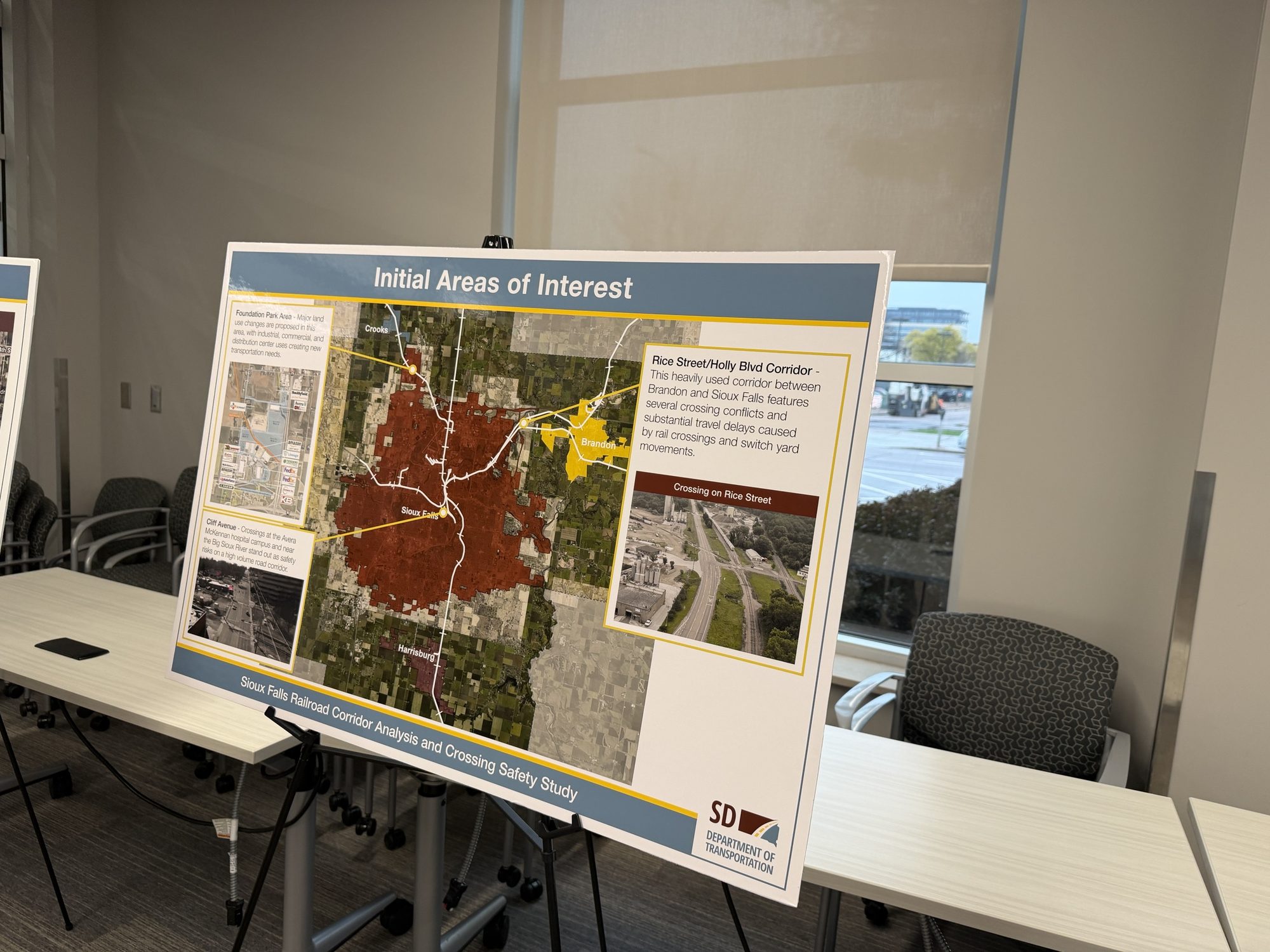
There's no construction money yet. One board answered the questions people ask most. The study is paid for by a federal grant. There's no funding yet to build anything it recommends. When the study wraps up in summer 2027, SDDOT and the cities will have a ranked list of projects to use when they apply for grants. In the meantime, crossings keep getting upgraded one at a time, like the new medians at the downtown crossings this year.
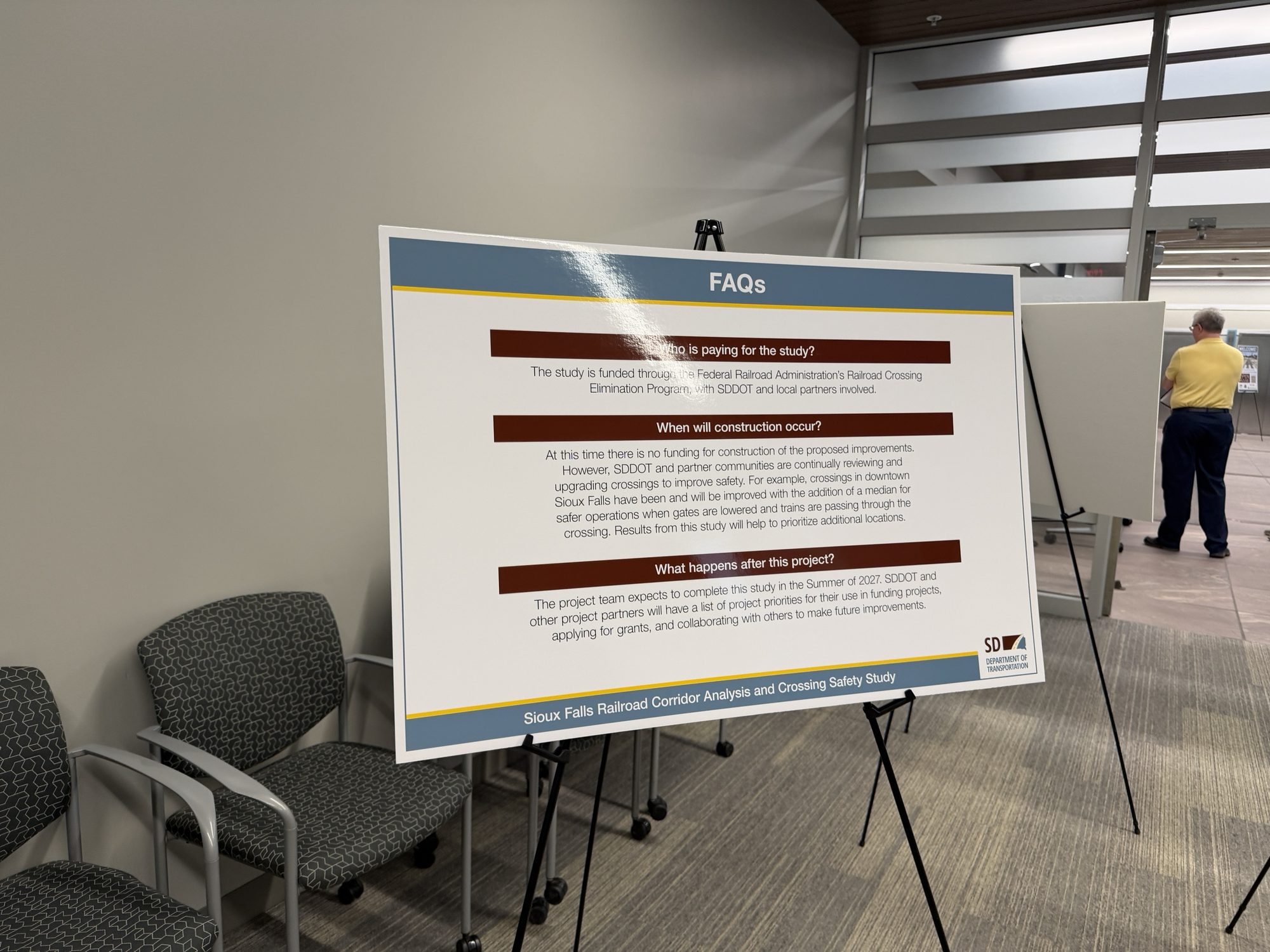
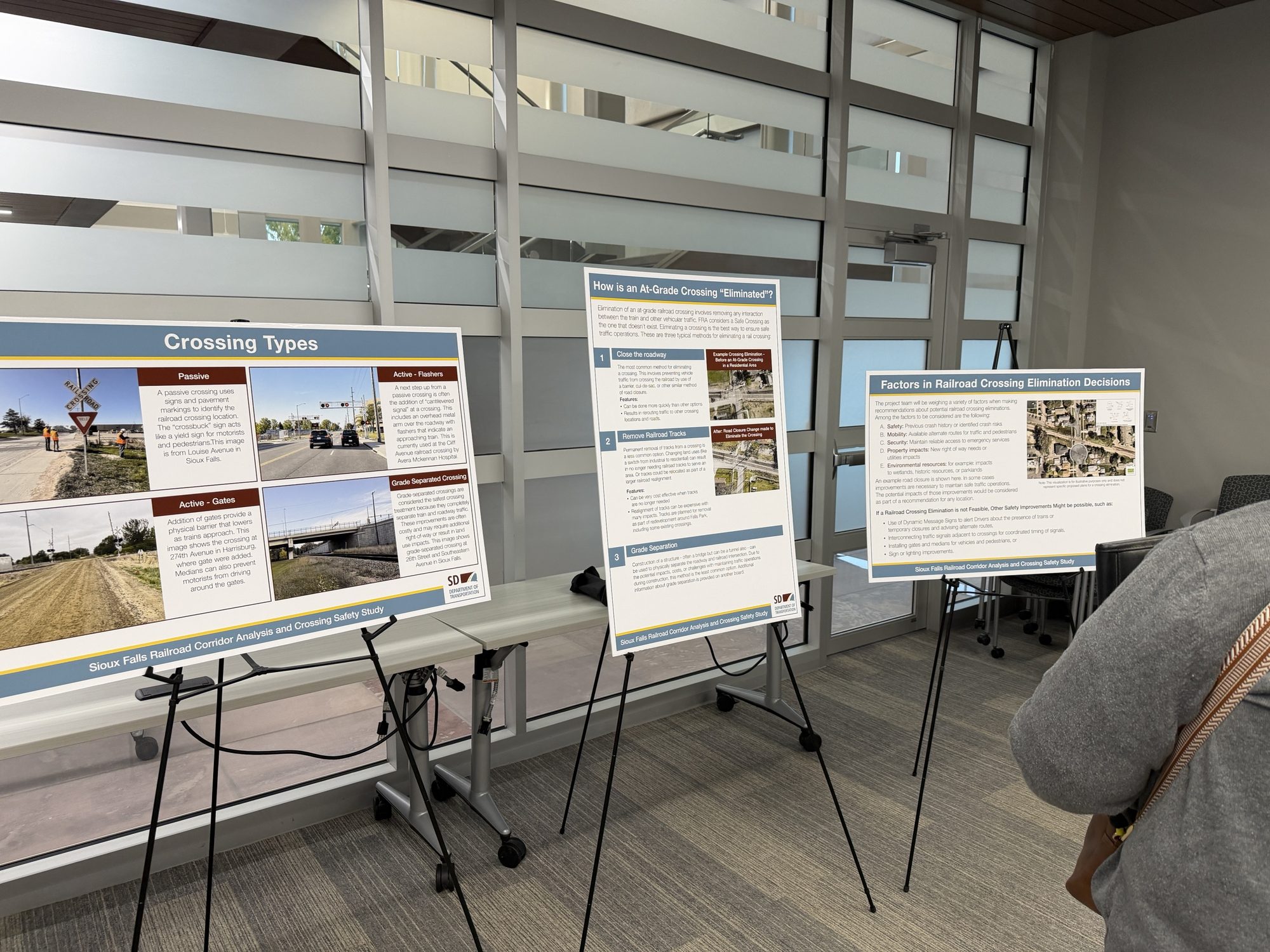
The other boards walked through crossing types, the three ways to remove a crossing, and what the team will weigh: safety, getting around, emergency access, property and the environment.
How to get more people in the room
I also met Katrina Burckhard, SDDOT's planning engineer and the main contact for both the railroad study and the viaducts. We talked about how hard it is to get people to sessions like this.
I shared one idea: there may be some public input fatigue. This open house landed at the tail end of a heavy week, with the viaducts and data centers taking up most of the attention.
So we talked about showing up where people already are. When Confluence was gathering input on The Quarry, it came to the neighborhood association mixer at the library. People who would never have gone to a hotel ballroom shared their ideas that night. I wrote about it in A Friday night at the library.
Katrina said she knows how hard it is for families to make it to input sessions. SDDOT does have some money for "pop-up" information sessions. But those funds are limited, and they can't pay for food or childcare. Those are often exactly what make it possible for a parent to show up on a weeknight.
That's not a knock on anyone. It's a real gap, and worth naming. Neighborhood associations, schools, churches and community groups already gather people. If agencies brought the maps to them, more of the people who use these crossings every day would be heard.
Tell them about your crossing
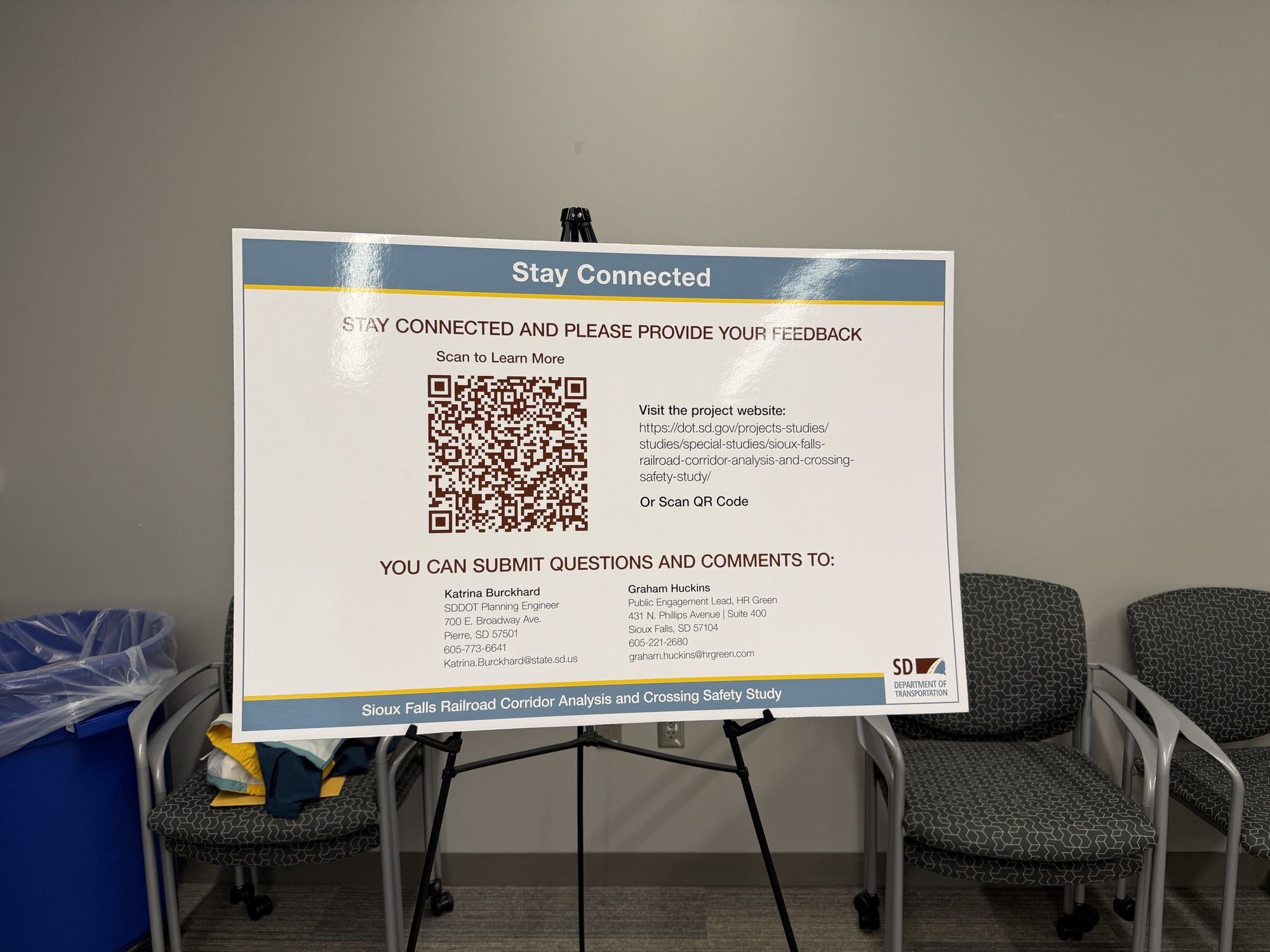
Gabin, Katrina and the team had one clear ask: drop a pin on your crossing online. Every pin gives them another data point and direct feedback on a real place, which is exactly what helps them decide where to focus.
You don't need to have gone to the open house. Everything from it is on the study website, including a recorded presentation.
Comment by Monday, Nov. 30. Take the online survey and interactive map, where you can pin a specific crossing and say what happens there.
Not sure what to say? Think about the crossings you use:
- Is there one where you've seen a close call?
- Is there one that's always blocked, or backs up traffic?
- If one closed, how would it change your drive, your walk or your bike ride?
Questions? Contact Katrina Burckhard at SDDOT, 605-773-6641, or Graham Huckins, HR Green's public engagement lead, 605-221-2680.
A second open house is planned for early 2027. Let's make sure that room is fuller.
It's always been our city, and now is our moment. Let's rise together.
Sources
- Sioux Falls Railroad Corridor Analysis and Crossing Safety Study, SDDOT, including the Open House #1 boards and handout
- My own visit to the Oct. 28 open house and conversations with the study team
Photos by Vince Danh.

Have a tip or a story idea? Email issues@risingtogethersf.com.