Nov. 18, 2026 · 7 min read
Creating pathways to hope. What the mayor's town hall put on the wall
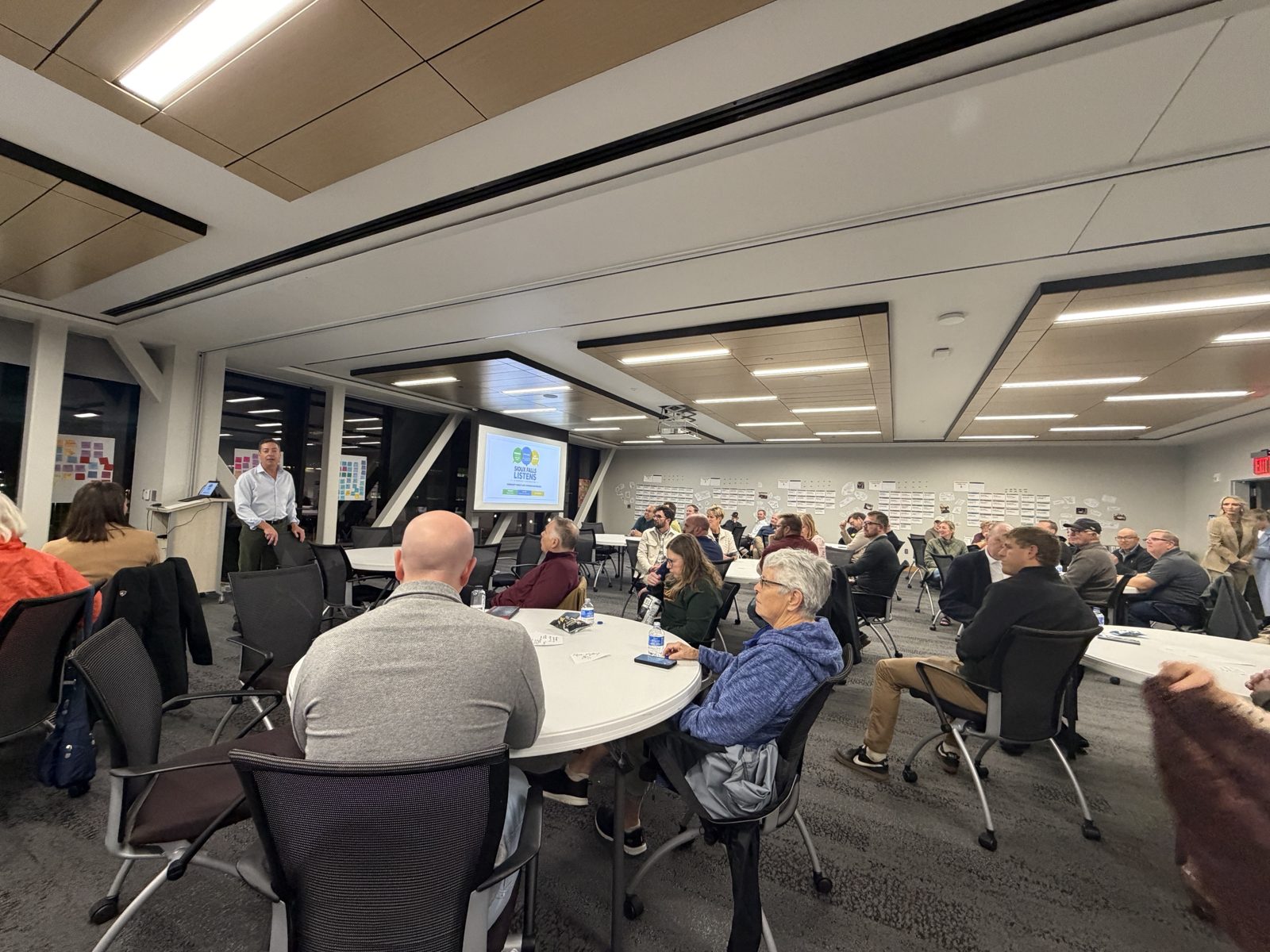
More than 80 people filled Cherapa Place for the last Sioux Falls Listens event. About half had never been to a listening session. Together they sorted six sessions of ideas into eight themes. Social services, opportunity and clearer communication came up again and again. Here's what happened and what comes next.
This fall I went to all three Sioux Falls Listens sessions that were open to the public at the Levitt at the Falls: arts, business and the region. Tonight felt different.
More than 80 people packed the third floor of Cherapa Place. When the facilitators asked who had been to a listening session before, about half the room raised a hand. So about half of us were brand new.
City employees and department directors were spread out across the room. They weren't up front behind a podium. They were at the walls with everybody else, reading cards and talking.
Six sessions, one room
This was the final event in Mayor Christine Erickson's Sioux Falls Listens series. She said she has held six listening sessions in 10 weeks since taking office. Three were the public sessions at the Levitt. The other three were built for specific communities, and I wasn't at those.
Each earlier session asked the same three questions:
- Preserve. What's going well that we should protect?
- Explore. What challenges and opportunities deserve our attention?
- Act together. What's one thing we could do together to make Sioux Falls stronger for everyone?
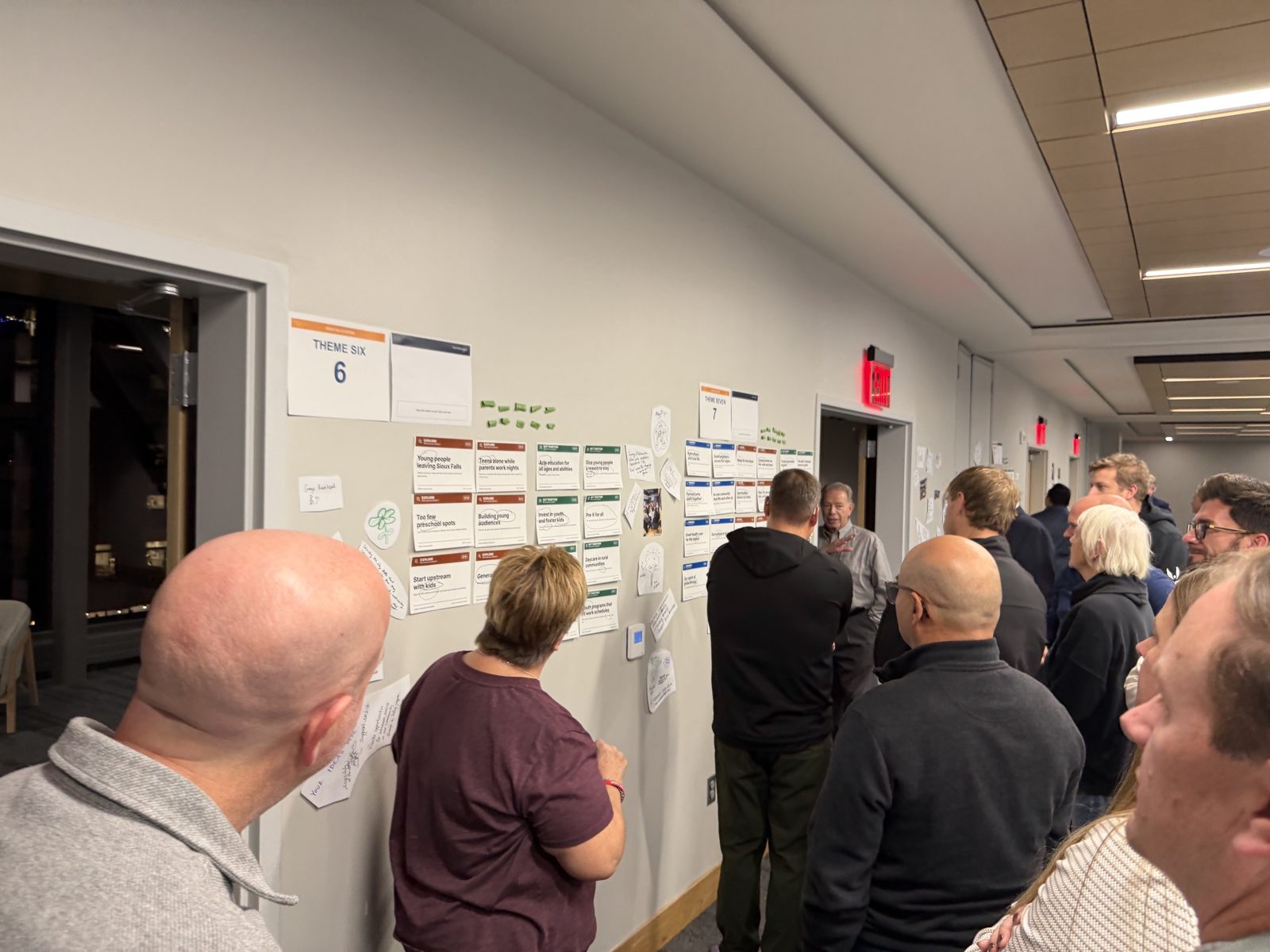
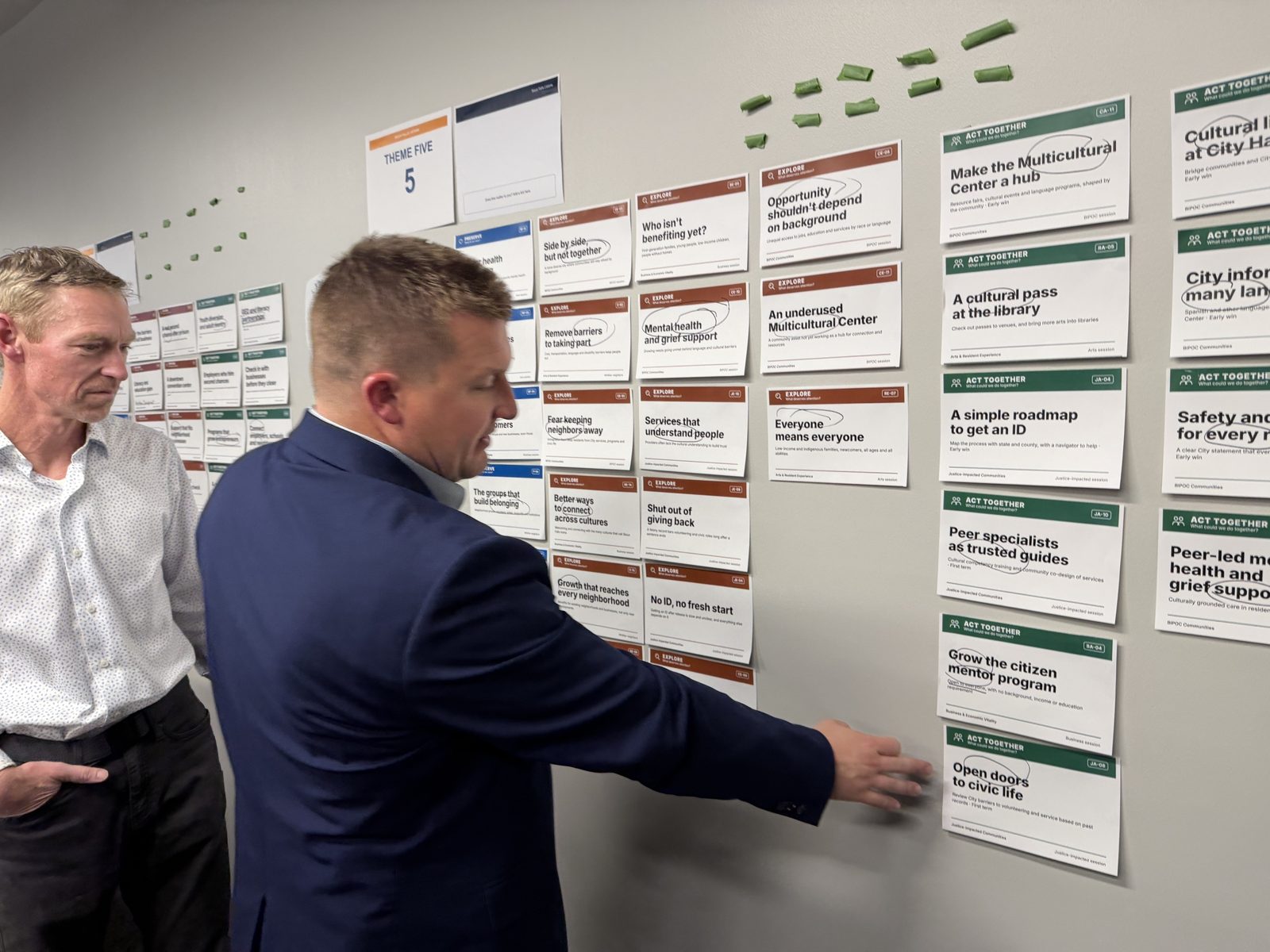
The mayor's transition team turned the ideas from every session into printed cards. Blue for preserve. Rust for explore. Green for act together. Each card was labeled with the session it came from: business, arts, the region, BIPOC communities, justice-impacted communities and Whittier neighbors. Then the team grouped the cards into eight themes and taped them to the walls.
Our job tonight was to help make sense of it all.
How the night worked
John Beranek, who facilitated the public sessions at the Levitt, and a second facilitator split us into groups of eight to 10. They asked us not to stand with anyone we came with.
Then we did a gallery walk. Eight walls. Three minutes at each. One person in each group held a marker and circled the words that jumped out.
After that, each group went back to its first wall and gave that theme a name. Three to five words. Ending in "ing," so it sounds like action.
Then everyone voted with dots. Green for priority. Red for impact. We could think short term, one to 12 months, or long term, three to five years.
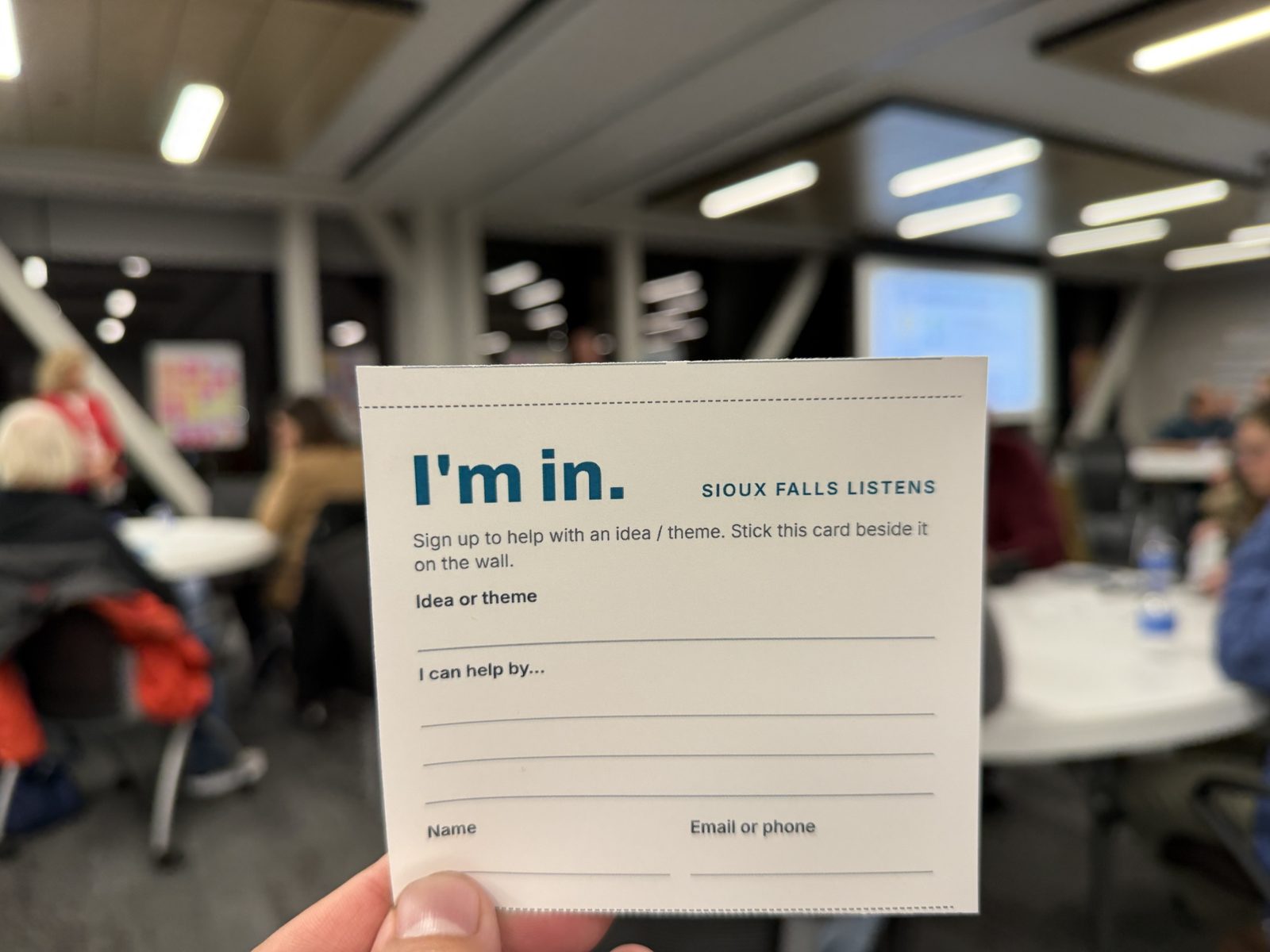
Last, each of us filled out a card called "I'm in." It asked what we're willing to help with, and we stuck it next to that idea on the wall.
The eight themes
Here are the names the groups gave each wall:
- Building and investing in inclusive communities. Neighborhood character, parks, libraries, public art and places to meet your neighbors.
- Creating pathways to hope. Housing people can afford, filling the gap out of poverty and a real path to getting ahead.
- Creating accessible transportation. Safe streets for walking and biking, evening and weekend transit and rides from nearby towns to jobs.
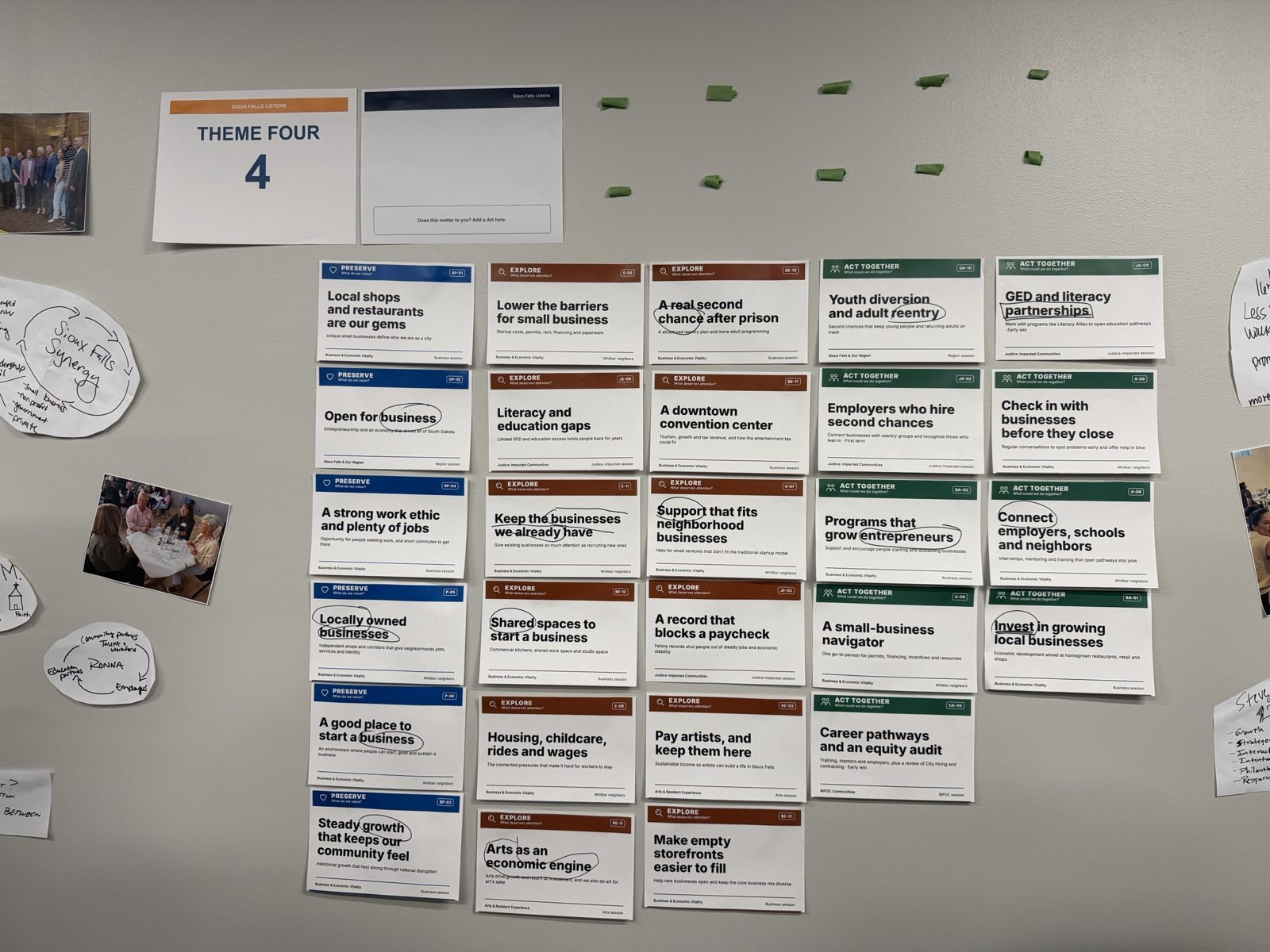
- Creating economic opportunities. Local shops, lower barriers for small business, a small-business navigator and employers who hire second chances.
- Creating culturally appropriate resources. Making the Multicultural Center a hub, city information in many languages and services that understand people.
- Taking care of kids and investing in the future. Pre-K for all, youth programs that fit work schedules and giving young people a reason to stay.
- Connecting the region. Sharing services across communities, a regional table of leaders and making City processes less confusing.
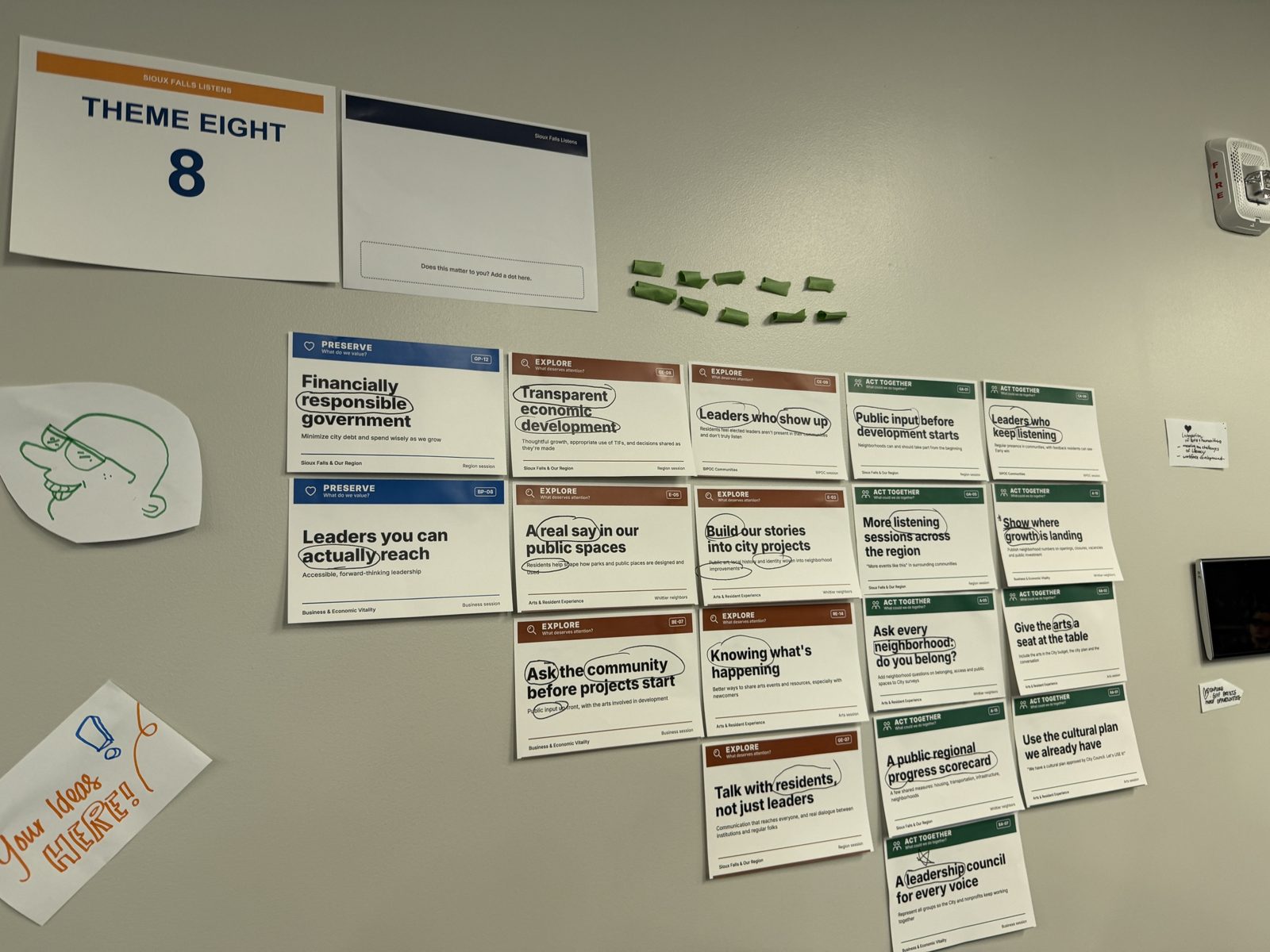
- Communicating. Transparent, responsible, listening and proactive. Knowing what's happening, leaders who keep listening and asking the community before projects start.
My group named Theme Two. Our wall was full of cards about housing, poverty, workforce training, second chances and people slipping through the cracks. The thread was opening doors so people can build a life here. "Creating pathways to hope" is where we landed.
What kept coming up
When the facilitators asked what people noticed, three things came up most.
Social services. This was the loudest one all night. Housing that's affordable and stable. Support for people coming out of the justice system. Help for neighbors who are struggling.
Opportunity. Workforce training for all ages. Childcare. Small businesses. Paths for young people to build a future here.
Communication. People want to know what the City is doing and why. Transparency got circled more than once. One idea from the night said it well: an open door isn't enough if people don't know the door is open.
One more idea stuck with me. Several people said we need to stretch the word "infrastructure." It's not just roads and sewer lines. It's parks, libraries, transit, neighborhoods and the paths people take to get back on their feet.
Two cards I can't stop thinking about
On the Theme Seven wall, two cards sat close together.
One said "Resource rich, systems poor." Its note asked for one place that connects people to the help we already have.
The other said "Make City processes less confusing." Permits, event planning and funding steps that residents can actually follow.
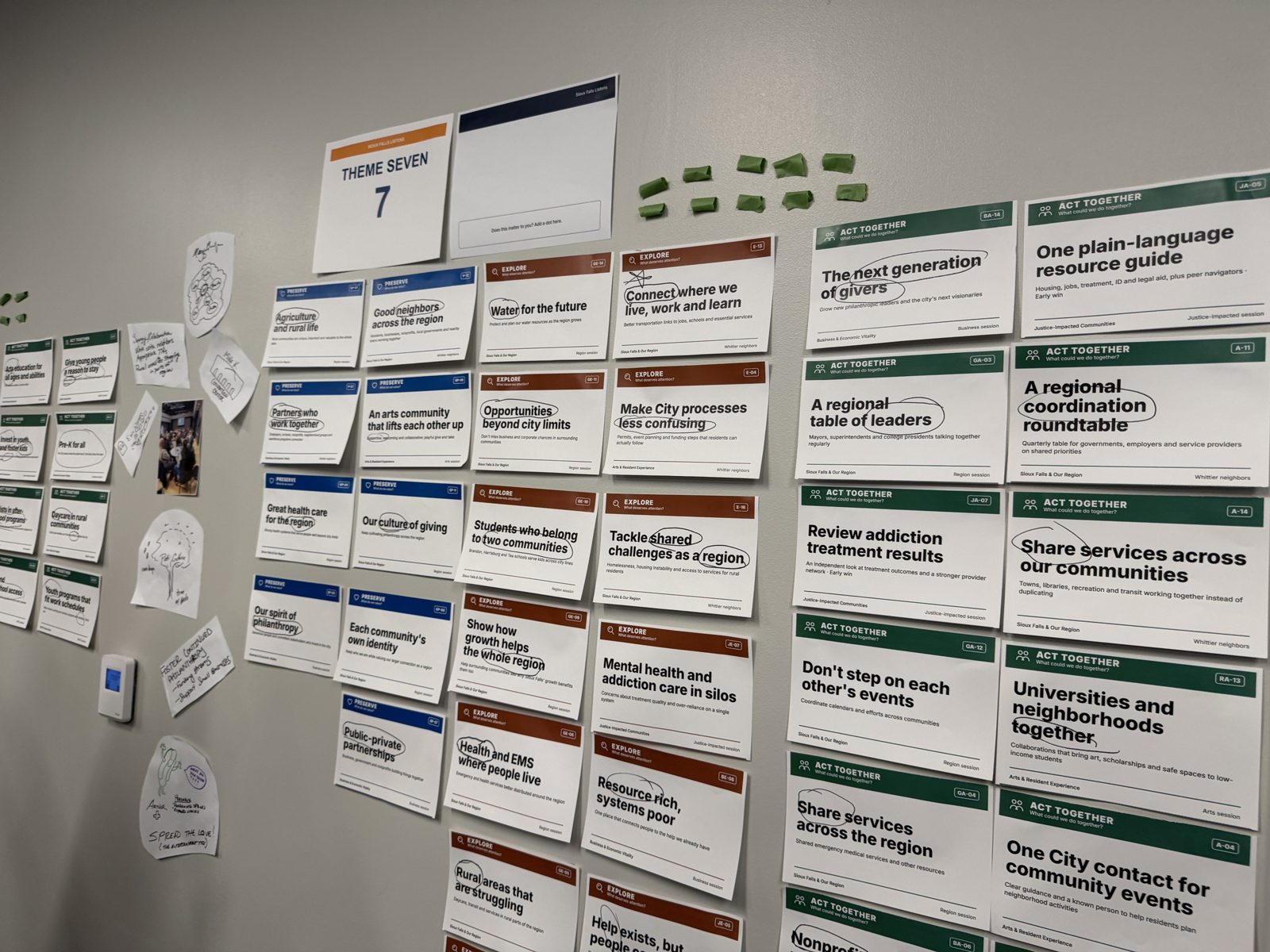
Neighbors from different sessions landed in the same place. The help is here. It's just hard to find.
Who wasn't in the room
Near the end, someone raised something important. Thousands of people in Sioux Falls couldn't be there. Some don't speak English. Some don't feel included in rooms like this.
The facilitators said they've offered to hold sessions wherever groups want to meet. If a group is missing, they want to go to them.
That's a fair challenge for all of us. Including me.
What happens next
The transition team is near the end of its first 100 days. Beranek said a summary document is coming, and that many of the themes on the walls match what the team has been discussing.
The mayor said she wants to keep holding listening sessions for the rest of her term. Not six in 10 weeks, but every couple of months, each on a different topic. She also said the City can't do all of this alone. That's what the "I'm in" cards were for.
When the summary document comes out, I'll break it down here in plain words.
Where I put my dots
I gave both of mine to the same card on the Theme Five wall: "Everyone means everyone." Green for priority. Red for impact.
The card came out of the arts session. Its note named low-income and Indigenous families, newcomers, all ages and all abilities.
Here's why. Almost every idea in the room only works if it reaches everyone. If it doesn't reach the neighbors who were missing tonight, we haven't really done it.
My commitment
My card was easy to write. I committed to keep making city issues and processes less confusing.
That's the promise I made when I ran for City Council. Make city information easier to find and easier to understand, so more people can take part. I didn't win the seat. I'm keeping the promise anyway. That's why Rising Together exists.
Sioux Falls is resource rich. Those two cards on the Theme Seven wall showed where we fall short: finding our way in. So that's the work. Plain-words explainers on what the City is deciding. One calendar for every public meeting and comment deadline. A Neighborhood Guide that shows who represents you.
That's my part of everyone means everyone.
Your move
You don't have to wait for the next listening session.
- Find your neighborhood association. Type your address into our Neighborhood Guide. See your association and who represents you.
- No association yet? Come to the City's free info meeting on neighborhood grants, Tuesday, Dec. 8, at the Downtown Library.
- Keep up. Check the civic calendar and get The Rise each week.
Get informed. Get heard. Get active.
Sources
- My own notes, photos and recording from the Sioux Falls Listens Town Hall, Wednesday, Nov. 18, 2026, Cherapa Place.
- City of Sioux Falls, Sioux Falls Listens Town Hall event listing.
- Earlier recaps: What downtown business told the mayor, What the arts community told us and notes from the regional session.

Have a tip or a story idea? Email issues@risingtogethersf.com.
